Key Takeaways
- Roofing projects often need a crane for material delivery, debris removal, or rooftop equipment placement rather than structural lifting.
- Boom trucks and mobile cranes are common choices for residential and light commercial roofing work.
- Larger commercial roofing projects may require higher-capacity mobile or crawler cranes, especially for HVAC placement.
- Roof pitch, access, and material staging all affect which crane setup works best.
- Coordinating timing with the roofing crew helps keep material delivery and debris removal efficient and safe.
Boom trucks and mobile cranes are common choices for residential and light commercial roofing work. The right crane depends on the project’s lifting requirements, reach, access, and available setup space.
Roofing projects create specific lifting challenges that differ from general construction work. Instead of setting structural steel or precast concrete, roofing crews typically need materials such as shingles, underlayment, and flashing delivered directly to the roof surface. Cranes may also be used to lift rooftop equipment or remove debris during a tear-off.
An experienced crane service firm in Kitty Hawk, NC chooses the right crane for these tasks depending less on raw lifting capacity and more on precision, reach, and the ability to work efficiently around an occupied structure. This article looks at the crane types commonly used in roofing work and the factors that influence which option fits a given job.
Why Roofing Projects Often Need a Crane
Manually carrying bundles of shingles up ladders or through a house is slow, physically demanding, and increases the risk of worker injury. A crane can lift pallets or bundles directly to the roof deck in a fraction of the time, allowing crews to begin installation sooner and reducing wear on workers who would otherwise be hauling materials by hand.
Cranes are also useful during tear-off, when old shingles, underlayment, and debris need to be removed from the roof and lowered to a dumpster or truck below. On commercial buildings, cranes may additionally be used to place or remove rooftop HVAC units, ductwork, or other mechanical equipment as part of a broader roofing or reroofing project.
Boom Trucks for Residential and Light Commercial Roofing
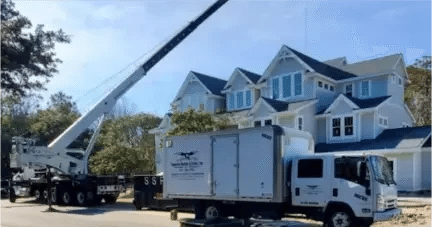
Boom trucks, sometimes called material handlers, are among the most common pieces of equipment used for residential roofing material delivery. Mounted on a truck chassis, these units are designed to lift bundled materials to rooftop height and place them at a specific point on the roof, minimizing the distance crews need to carry supplies by hand.
- Boom trucks are well suited to single-family homes and smaller commercial buildings because they can typically be positioned in a driveway or along a street with minimal site disruption.
- Setup time is generally shorter than for larger mobile cranes, which makes boom trucks a practical choice for projects where the crane is only needed for a few hours to complete material delivery.
Mobile Cranes for Larger or More Complex Roofs
For steeper roof pitches, larger commercial buildings, or projects involving heavier rooftop equipment, a mobile crane may be a better fit than a boom truck.
- Mobile cranes offer greater lift height and capacity, which is useful when materials or equipment need to be placed at multiple points across a large roof surface, or when the building’s height exceeds what a boom truck can safely reach.
- Mobile cranes also provide more flexibility in boom angle and reach, which can help when the crane cannot be positioned directly next to the building due to landscaping, parking areas, or other site constraints.
- The added reach comes with a trade-off: mobile cranes generally require more setup space and a firmer, more level surface for outrigger placement than a boom truck does.
Crawler Cranes for Heavy Rooftop Equipment
Commercial re-roofing projects that involve removing or installing large HVAC units, chillers, or other heavy mechanical equipment sometimes call for a crawler crane. Because crawler cranes distribute weight across tracks rather than concentrated outrigger points, they can be a practical option on rooftops or ground areas where soil conditions or nearby structures limit the use of a wheeled crane.
Crawler cranes are less common for standard material delivery, since they typically take longer to mobilize and require more space to set up. They tend to be reserved for heavier, more specialized lifts on commercial roofing projects rather than routine shingle or underlayment delivery.
Factors That Influence Crane Selection for Roofing
Several site- and project-specific details help determine which crane makes sense for a roofing job.
- Roof height and pitch affect how much boom length and lift capacity are needed to safely place materials without excessive swing or repositioning. Steeper roofs may also require more careful placement to avoid materials sliding once set down.
- Building footprint and site access determine where the crane or boom truck can be positioned. Homes with narrow driveways, mature trees, or overhead power lines may limit setup options, while commercial sites with larger parking areas typically offer more flexibility.
- Material volume matters as well. A small residential reroof may only need one or two lifts, while a large commercial project could require multiple loads staged at different points across the roof throughout the day.
- Weather and wind conditions can affect crane operations, particularly for taller lifts or when handling large, lightweight materials such as insulation panels that catch wind easily.
Coordinating Timing With the Roofing Crew
Efficient use of a crane on a roofing project depends on clear coordination between the crane operator and the roofing crew. Materials should be staged and ready for pickup so the crane is not left idle waiting for bundles to be prepared. Similarly, the crew should have a clear plan for where materials will be placed on the roof to avoid obstructing walkways or work areas.
For tear-off projects, coordinating debris removal lifts throughout the day, rather than waiting until a large pile accumulates, can help keep the roof surface clear and reduce trip hazards for workers.
Safety Considerations Specific to Roofing Lifts
Lifting materials onto an occupied roof introduces safety considerations beyond a standard ground-level lift.
- Ground crews should maintain clear communication with the operator, and workers on the roof should stay clear of the load’s path until it is safely set down.
- Wind speed should be monitored throughout the day, since gusts can affect load stability more at rooftop height than at ground level.
Contractors should also confirm that the crane or boom truck is not lifting over occupied areas of the home or building, such as entryways still in use, unless those areas have been properly cordoned off for the duration of the lift.
Reducing Wear and Risk for Roofing Crews
Manual material handling is one of the more physically demanding parts of roofing work, and repeated ladder trips carrying heavy bundles contribute to fatigue and a higher risk of injury over the course of a project. Using a crane or boom truck to deliver materials directly to the work area reduces the number of trips crews need to make and allows them to spend more of the day on actual installation rather than material handling.
This efficiency gain tends to be most noticeable on larger projects, where the cumulative time saved across dozens of material deliveries can meaningfully shorten the overall project timeline. Even on smaller residential jobs, a single well-timed lift at the start of the day can set the crew up to work efficiently without needing to stop and haul more materials partway through installation.
Planning Around Multiple Trades on Commercial Sites
Commercial roofing projects often involve coordination with other trades working on or near the same building, including HVAC contractors, electricians, or general contractors managing the broader renovation. When a crane is scheduled for roofing material delivery or equipment placement, it helps to confirm that the lift zone and staging area will not conflict with other scheduled work.
Sharing a general timeline with other trades on site, particularly if the crane will also be used to place or remove mechanical equipment, can prevent scheduling conflicts and make more efficient use of the time the crane is on site. In some cases, coordinating multiple lifts for different trades within the same crane visit can reduce overall equipment costs for the project.
Preparing the Roof Surface for Material Placement
Before a lift begins, it helps to have the roof surface ready to receive materials safely. This means confirming that the intended placement area is structurally sound, particularly on older roofs where decking condition may be uncertain, and that materials will be distributed rather than stacked in a single concentrated point that could stress the roof structure. Crews should also have a plan for securing materials against wind once they are set down, especially on steeper roofs where loose bundles can shift.
Clear communication between the roofing foreman and the crane operator about exactly where each load should be placed helps avoid repositioning delays and keeps the lift moving efficiently from one load to the next.
How Working With Albemarle Crane Service Can Make a Difference
Albemarle Crane Service provides reliable crane support for residential and commercial roofing projects in Kitty Hawk, NC. Our experienced team helps contractors choose the right boom truck or mobile crane based on roof height, load size, reach, and site access. We make it easier to deliver roofing materials directly to the roof, reducing manual handling and unnecessary ladder trips. Our services can also support tear-off debris removal and rooftop HVAC or equipment placement.
With careful planning and experienced operators, Albemarle Crane Service helps keep lifts organized, efficient, and safe while working closely with roofing crews to coordinate material staging, placement points, and lift timing. Whether you’re handling a residential reroof or a larger commercial project, Albemarle Crane Service can provide the right equipment and dependable support for your lifting needs.
Frequently Asked Questions About Best Cranes for Roofing Projects in Kitty Hawk, North Carolina
Do all roofing projects need a crane?
Not necessarily. Small repair jobs or projects with easy roof access may not require one, but full tear-offs, steep roofs, or larger material volumes often benefit from crane-assisted delivery.
What is the difference between a boom truck and a mobile crane for roofing?
Boom trucks are generally used for lighter, shorter-duration material delivery on residential and small commercial roofs, while mobile cranes offer greater height and capacity for larger or more complex projects.
Can a crane help remove old roofing debris?
Yes, cranes and boom trucks are commonly used to lower tear-off debris from the roof to a dumpster or truck, which can speed up cleanup and reduce manual handling.
How much space is needed to set up a crane for a roofing job?
This depends on the equipment type. Boom trucks generally need less space than larger mobile cranes, which require room for outrigger placement and boom clearance.
How far in advance should a roofing contractor schedule crane service?
Scheduling early is recommended, particularly for larger commercial projects or jobs requiring specific site preparation, to ensure the right equipment is available on the planned date.
Summary Checklist: Choosing the Best Crane for Roofing
| Evaluation Area | What to Confirm |
| Roof height and pitch | Boom length and reach needed to place materials safely |
| Material volume | Number of lifts and whether staging will occur throughout the day |
| Site access | Driveway width, overhead lines, and space for setup |
| Equipment type | Boom truck for lighter residential jobs, mobile or crawler crane for heavier or larger lifts |
| Crew coordination | Staging plan and placement points communicated with the operator |
| Weather | Wind conditions monitored throughout the lift, especially for lightweight materials |
| Debris removal | Plan for lowering tear-off materials safely during the project |
Final Advice
Before scheduling a crane for a roofing project, evaluate the roof height and pitch, the weight and volume of materials, and the available space for equipment setup. For most residential and light commercial jobs, a boom truck may provide the reach and flexibility needed without an oversized setup. Larger buildings, heavier rooftop equipment, or difficult access may require a mobile or crawler crane.
It is also important to plan material placement and lift timing with the roofing crew in advance, particularly when working around occupied areas or multiple trades. If you’re unsure which equipment is best suited to your project, Albemarle Crane Service can help assess your lifting requirements and recommend a practical crane solution based on the job site and scope of work.