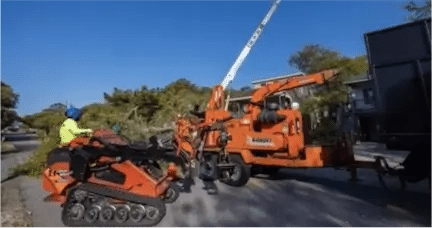
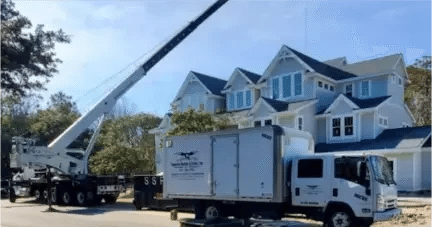
Installing a pool or hot tub isn’t always straightforward. Sometimes the perfect spot is tucked behind your house, blocked by fences, or sitting on uneven ground. When standard delivery trucks or dollies can’t reach, using a crane to install pools and hot tubs becomes the safest and most efficient solution.
Professional crane services make it possible to lift heavy pool shells and hot tubs over homes, trees, or tight spaces without damage. With the right planning and skilled operators, even complex backyard installations can be handled smoothly. This guide breaks down how crane-assisted installation works, when you need it, and what to expect before lift day.
When Do You Need a Crane for Pool or Hot Tub Installation?
Not every pool or hot tub installation requires a crane. Understanding when crane services become necessary can help you plan your project effectively and budget appropriately.
Common Scenarios Requiring Crane Services
Limited Side Yard Access
If you don’t have at least 40 inches of clearance to your backyard, traditional delivery with a dolly or trailer won’t work. Hot tubs typically require 40 inches of clearance to the backyard and 100 inches in height for standard delivery.
Obstacles in the Path
When fences, houses, sheds, trees, retaining walls, pools, or neighboring buildings block the path from the drop-off point to the final location, crane lifting becomes necessary. If you have any object that sits in the path that the spa must navigate from the drop-off point to its final location, you’ll likely need a crane to lift it over it.
Elevated Installations
Rooftop hot tubs, installations on elevated decks, or any location requiring vertical lift over structures need specialized crane equipment.
Steep Slopes
Manual delivery should be avoided if you have a significant slope on your block, as you don’t want your new spa hurtling downhill.
Large Pool Shells
Fiberglass pools that are 30 feet or longer and swim spas often require crane assistance due to their size and weight, especially when maneuvering through tight spaces.
Types of Cranes Used for Pool and Hot Tub Installation
Professional crane companies use different equipment depending on your specific needs. Understanding the differences helps you communicate effectively with crane operators and choose the right service.
Mobile Cranes
Mobile cranes feature legs that extend out from the base to offer extra stability, and a telescopic arm that boasts an impressive vertical and horizontal reach. These powerful machines work well for:
- Lifting pools or hot tubs over houses
- Moving installations up or down significant slopes
- Placing items far from the lifting location
- Heavier loads that require greater capacity
Mobile cranes use counterweights to maintain stability during lifts and can handle the most challenging installations.
HIAB Cranes
A HIAB is a subcategory of crane mounted on a truck, a more compact version of a mobile crane with smaller stabilizing legs and an arm that doesn’t reach as far. These cranes are ideal for:
- Smaller, simpler lifts
- Getting hot tubs over fences or gardens
- Installations close to the lifting location
- Residential areas with limited space
HIAB cranes don’t rely on counterweights but instead use the weight of the truck they’re attached to for stability.
Boom Trucks and Telehandlers
Builders can use a crane, an excavator, or a telehandler (also called a telescoping forklift or reach forklift) to handle fiberglass shells. These machines offer flexibility for medium-sized projects where full mobile crane capacity isn’t necessary.
The Crane Installation Process: Step by Step
Professional crane installations follow a detailed process that prioritizes safety, precision, and protects your property. Here’s what to expect when you schedule crane services for your pool or hot tub.
1. Site Assessment and Planning
As the first stage of hot tub lifting, crane services carry out a site inspection to ensure that the ground is completely safe for crane use and produce a method statement detailing the lifting process.
During this phase, professionals evaluate:
- Ground Conditions: Can the surface support the crane’s weight and outriggers?
- Overhead Clearances: Are there power lines, trees, or other obstructions?
- Access Routes: Where will the crane set up, and how will it reach your property?
- Lift Points: What are the exact coordinates for pickup and placement?
- Weight Specifications: What is the total weight of the pool or hot tub shell?
To ensure safety, a crane operator needs to know the dimensions and weight of your hot tub, and if you do not provide accurate information, the crane could fail.
2. Permits and Documentation
Under the North Carolina Overhead High-Voltage Line Safety Act (G.S. 95-229), anyone planning to operate a crane within 10 feet of a high-voltage line must notify the utility owner at least 48 hours in advance. This legal mandate ensures that safety barriers or line de-energization are in place before the lift begins. Your crane service provider should help with:
- Local authority applications
- Road closure permits (if needed)
- Utility notifications (especially for overhead power lines)
- Insurance documentation
Professional crane companies provide general liability insurance that exceeds local and industry standards.
3. Equipment Setup
On installation day, the crane operator arrives early to set up the equipment properly. This includes:
- Positioning the crane in the optimal location
- Extending stabilizing outriggers or legs
- Using protective mats to prevent property damage
- Testing equipment before the lift begins
Experienced crane operators use protective measures like specialist mats and ensure proper outrigger placement to spread the weight evenly.
4. Rigging and Securing the Load
Proper rigging and slinging techniques are critical to ensuring the safety and stability of the load during lifting, and all rigging equipment must be thoroughly inspected before commencing the lift.
For hot tubs and pools, operators typically use:
- Industrial-grade straps or slings
- Custom spreader bars (especially for large hot tubs to prevent crushing)
- Multiple attachment points for balance
- Protective padding where straps contact the shell
Custom spreader bars reduce the risk of breaking large tubs by distributing lifting forces evenly across the structure.
5. The Lift
HIAB cranes operate with precision, which is vital when maneuvering expensive and bulky items above existing structures without causing damage.
During the actual lift:
- The operator slowly raises the load while monitoring for any shifting
- Team members guide the pool or hot tub through the air
- Communication between the ground crew and operator remains constant
- Weather conditions (especially wind) are continuously monitored
- The load is carefully positioned over the installation site
Installers make small adjustments using levels and lasers with a tolerance tight within half an inch across the full span.
6. Placement and Final Positioning
Once the pool or hot tub reaches its destination:
- The crane operator lowers it slowly onto the prepared foundation
- Team members guide final positioning for accuracy
- Levels are checked to ensure proper placement
- The rigging is carefully removed
- Final inspections confirm the shell wasn’t damaged during transport
Preparing Your Property for Crane Installation
Proper preparation ensures a smooth installation day and prevents delays or complications.
Foundation Requirements
For Hot Tubs
Your hot tub must be positioned on a solid, leveled foundation or flooring, ideally a 4-inch-thick concrete base measuring at least 2.5 meters by 2.5 meters. The base must support weights exceeding 1,800 kg (nearly 4,000 pounds) when filled.
For Fiberglass Pools
The entire pool floor must rest on a solid foundation to ensure the pool is structurally sound and prevent it from shifting and settling over time. Most installations use a gravel base that’s been properly compacted and leveled.
Clear Pathways and Overhead Space
Before installation day:
- Remove any obstacles along the crane’s access route
- Trim tree branches that might interfere with the lift
- Notify neighbors about the scheduled work
- Arrange for utility companies to mark underground lines
- Ensure gates or entry points are wide enough for equipment
Safety near utilities is governed by OSHA Standard 1926.1408, which requires a minimum clearance of 10 to 20 feet from residential power lines. If a lift must occur within this ‘prohibited zone,’ the utility provider must de-energize the lines or the crane must be equipped with specialized insulating links.
Pre-Installation Inspection
If moving an existing hot tub, conduct a thorough inspection:
Look at all fasteners and screws that keep the hot tub intact, replace any rusted fasteners, and ensure the motor and other internal compartments are securely bolted in place.
Safety Considerations and Best Practices
Professional crane services prioritize safety through multiple layers of protection and planning.
Certified Operators
Hot tub lifting safety is dependent on the skill and experience of qualified crane operators who are trained and certified professionals with experience in lifting heavy loads.
Look for operators with:
- NCCCO (National Commission for the Certification of Crane Operators) certification
- Years of experience with residential installations
- Comprehensive insurance coverage
- Positive customer reviews and references
Weather Monitoring
Environmental factors such as wind, rain, or uneven terrain can significantly impact safety, and crane operators must closely monitor weather conditions.
Wind is particularly critical because pool and hot tub shells act like sails. Operators may postpone lifts if conditions become unsafe.
Equipment Maintenance
Cranes and hot tub lifting equipment must undergo regular maintenance and inspections to guarantee safe and efficient performance, with routine checks covering structural integrity, hydraulic systems, electrical components, and all safety devices.
Reputable companies maintain detailed service records and provide certification for their equipment.
What to Expect: Timeline and Process
Understanding the typical timeline helps you plan accordingly and set realistic expectations.
The actual crane lift typically takes only 1-2 hours, but the entire installation day requires more time for setup, positioning, and cleanup.
Cost Factors for Crane Installation
While this article doesn’t discuss specific pricing, several factors influence the overall investment in crane services:
- Distance and Accessibility: The further the crane must reach and the more challenging the access, the larger the equipment needed.
- Pool or Hot Tub Size: Larger shells require bigger cranes with greater lifting capacity.
- Site Complexity: Obstacles, slopes, utility lines, and confined spaces increase planning and execution time.
- Permits and Coordination: Road closures, traffic management, and utility coordination add to project complexity.
- Time of Year: Some companies offer discounts during the off-season, so you might save money by installing during fall or winter.
- Alternatives to Crane Installation: In some cases, alternatives to crane services may work for your project.
Excavator Transport
About 99% of the time, installers use excavators to set fiberglass pools, which is the same machine used to dig the hole. This works when:
- Side yard access exceeds minimum clearances
- No obstacles block the path
- Ground conditions support heavy equipment
- The pool can be transported horizontally
Manual Installation Methods
For smaller hot tubs in accessible locations, manual installation using:
- Spa dollies
- Multiple team members
- Rolling techniques
- Temporary ramps or paths
The Hot Spring Freeflow Mini, with a dry weight of 115kg and a footprint of a little over two square meters, could be pushed, lifted, and shifted into place by a team of physically able individuals.
However, larger spas like the Prism with a dry weight of 540kg or swim spas at 1,903kg are impossible to move manually.
Common Questions About Crane Pool and Hot Tub Installation
How heavy are pools and hot tubs?
Empty hot tubs typically weigh between 400 and 1,000 pounds, while filled hot tubs can exceed 4,000 pounds. Even a small spa can easily weigh 1,500 kg (3,300 lbs), and larger units can weigh three times that amount.
Fiberglass pool shells vary significantly, with smaller pools weighing around 1,000 pounds and larger 40-foot models weighing several thousand pounds.
Can a crane lift a pool or hot tub over my house?
Yes. The installation of hot tubs in challenging locations often requires the precision and flexibility of HIAB cranes, which are ideal for navigating tight spaces and lifting heavy loads over structures. Modern cranes routinely lift pools and hot tubs over houses, fences, and other obstacles.
Will the crane damage my property?
Professional crane operators take extensive precautions to protect your property. Experienced crane operators use protective measures like specialist mats and ensure proper outrigger placement to spread the weight evenly.
How long does crane installation take?
The timeframe depends on the complexity of the job, including access, weight of the item, and final placement. Most crane installations are complete within 2-8 hours from setup to final placement.
What if the weather is bad on installation day?
Safety always comes first. Professional crane services prioritize safety for both staff and property, and may reschedule if weather conditions pose risks.
Do I need special permits?
In some cases, permits might be required depending on the size of what’s being lifted or the location, especially near power lines. Your crane service provider should advise you on permit requirements.
Can pools fit through narrow spaces without cranes?
With 10 feet 6 inches of clearance between two houses, installers can get any pool installed with added care and consideration. However, this requires specialized equipment and experienced installation teams.
What are the biggest risks during crane installation?
With a good crane operator, there’s little chance of something going wrong, though inexperienced operators or added weight like rainwater in the pool can lead to problems. This is why choosing certified, experienced professionals is essential.
Should I be present during installation?
While not required, being present allows you to communicate with the installation team, answer questions about placement, and witness the process. Many homeowners find watching the crane lift exciting and reassuring.
How do I choose a crane service provider?
Look for companies with:
- Proper certifications and licensing
- Comprehensive insurance coverage
- Experience with pool and hot tub installations
- Positive customer reviews
- Transparent communication about process and expectations
- Willingness to conduct site assessments
Making Your Pool or Hot Tub Dreams a Reality
Crane installation makes backyard projects possible when traditional delivery methods fall short. With the right planning, property preparation, and a certified crew, you can safely install your pool or hot tub in almost any location.
Success comes down to three things: thorough planning, clear communication, and realistic expectations about timing and site conditions. Whether you’re lifting a hot tub over your home or setting a fiberglass pool in a narrow yard, modern crane equipment makes complex installations straightforward and safe.
If you’re ready to take the next step, contact Albemarle Crane Service to schedule a site visit. Our team will assess your property, recommend the best lifting plan, and handle every stage with precision and care.
About Albemarle Crane Service
Located at 934 West Kitty Hawk Road, Bldg A3, Kitty Hawk, NC 27949, Albemarle Crane Service provides expert crane solutions for pool and hot tub installations throughout the region. Contact us at (252) 999-9110 to discuss your project and schedule a site assessment.