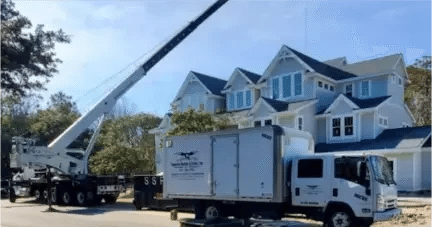
Key Takeaways:
- Spring is the peak window for Outer Banks construction due to mild weather and pre-tourist season timing.
- Specialized equipment, such as boom trucks, is essential for navigating narrow coastal lots and sandy terrain.
- Safety and precision are paramount when lifting heavy materials near existing residential structures.
- Crane services significantly reduce labor time for HVAC, roofing, and structural steel placement.
- Local expertise ensures compliance with OBX-specific wind safety and municipal permitting.
Spring in the Outer Banks, North Carolina, is a race against the clock. As the winter chill fades and the heavy influx of summer tourists remains a few months away, the building season hits its stride. From Corolla down to Hatteras, the sound of hammers and the sight of rising pilings define the landscape. For contractors and homeowners alike, this window is the most productive time for structural work, renovations, and new builds. However, building on a sandbar presents unique logistical hurdles that traditional ground crews simply cannot overcome alone. This is where the strategic use of crane lifts becomes the backbone of a successful spring project.
In a region where houses are built high on pilings to escape storm surges, and lots are often packed tightly together, the ability to lift heavy materials over obstacles is not just a luxury; it is a necessity. Using a crane for spring construction lifts allows for the placement of heavy trusses, structural steel, modular components, and even large appliances with a level of precision that manual labor can’t match.
Navigating the Unique Challenges of OBX Coastal Building
Building in the Outer Banks isn’t like building inland. The environment is beautiful but unforgiving. When planning spring construction lifts, several factors come into play that require expert oversight.
a.) Sandy Soil and Stability
The ground in Kitty Hawk, Nags Head, and Southern Shores is primarily sand. While sand provides excellent drainage, it offers challenging support for heavy machinery. Professional crane services must utilize specialized outrigger pads and strategic positioning to ensure the crane remains level and stable while under load. A lift that doesn’t account for soil shifting is a hazard.
b.) Narrow Lots and Tight Access
Many of the most desirable building sites in the OBX are on narrow strips of land between the ocean and the sound. Maneuvering large delivery trucks or staging materials on the ground is often impossible. A boom truck or crane can sit in a single designated spot, often on the street or a small driveway, and reach over the existing structures or dunes to drop materials exactly where the carpenters need them.
c.) The Spring Wind Factor
While spring offers milder temperatures, it is also known for its unpredictable wind shifts. Coastal gusts can pick up in seconds. Professional crane operators in the Outer Banks are trained to monitor wind speeds constantly. They understand the sail area of a load, how much the wind will catch a large roof truss or a sheet of plywood, and will only proceed when conditions are within strict safety margins.
Essential Lifts for Spring Projects
Spring is often the time when dry-ins occur, getting the house sealed before the humid summer months. Several key components of this process rely heavily on crane support.
a.) Truss and Roof Rafter Placement
Manhandling roof trusses up two or three stories is dangerous and incredibly time-consuming. A crane can lift an entire bundle of trusses and place them individually onto the top plates in a fraction of the time. This keeps the crew fresh and focused on the technical aspects of fastening and bracing rather than the brute force of lifting.
b.) Structural Steel and Beams
Modern OBX beach houses often feature large open floor plans and massive windows to take in the ocean views. These designs require heavy steel I-beams for structural support. These beams are far too heavy for a standard crew to lift. A crane provides the pick power to set these beams onto pilings or mid-floor supports with millimetre accuracy.
c.) HVAC and Heavy Equipment
Spring is the prime time for HVAC replacements before the summer heat hits. In the Outer Banks, condenser units are almost always mounted on elevated stands to protect them from flooding. Lifting a 300-pound unit ten or fifteen feet into the air to a custom-built rack is a standard crane task that saves back strain and prevents damage to expensive new equipment.
d.) Modular and Panelized Components
With the labor shortage in the construction industry, many OBX builders are turning to modular or panelized construction. These large, pre-built sections of a home are delivered on trailers and must be lifted into place. A crane is the only way to move these massive components from the transport trailer to the foundation safely.
Improving Site Efficiency and Safety
The most significant advantage of incorporating crane lifts into your spring construction schedule is the boost in overall site efficiency. When a crane handles the heavy lifting, the flow of the job site changes. Instead of ten men struggling to move a beam, two men can guide the beam into place via radio communication with the operator.
Safety is the other side of the coin. Most construction injuries occur during the manual transport of heavy materials. By removing the human element from the most dangerous lifts, you significantly lower the risk of falls, crushed limbs, or long-term strain injuries. A crane lift is a controlled, engineered event rather than a chaotic physical struggle.
Planning Your Spring Lift Schedule
Because spring is so busy in the Outer Banks, timing is everything. Builders in Manteo, Duck, and Corolla know that crane schedules fill up weeks in advance. To make the most of a crane rental, it’s important to have the site ready. This means:
- Ensuring the delivery trucks are scheduled to arrive when the crane is on-site.
- Clearing a stable path for the crane to set up.
- Having the ground crew briefed on the lift sequence.
- Checking local permits to see if the crane needs to block a public road or right-of-way.
When it comes to spring construction in the Outer Banks, having a reliable partner for your lifting needs is the difference between staying on schedule and falling behind. Albemarle Crane Service is the premier choice for contractors and homeowners from Corolla to Hatteras.
Whether you are setting structural steel for a new oceanfront build, lifting heavy HVAC units for a spring upgrade, or positioning a new storage shed, our National Commission for the Certification of Crane Operators (NCCCO)-certified operators bring the precision and local expertise required for coastal environments. We understand the unique challenges of OBX sand and wind, providing safe, efficient, and on-time solutions that keep your project moving. Don’t risk manual lifting or unreliable equipment. Trust the local experts who have been serving the OBX community since 2017.
Frequently Asked Questions by Homeowners in North Carolina
How much notice do I need to give for a spring construction lift?
Spring is our peak season. We recommend calling at least one to two weeks in advance, though we do offer 24/7 emergency service and same-day appointments when our schedule allows.
Can your cranes set up on sandy driveways in North Carolina?
Yes. Our operators are highly experienced in OBX terrain. We use specialized stabilization equipment to ensure the crane is secure, even on sandy or uneven surfaces.
Do you handle permits for blocking the street during a lift?
While the contractor typically handles municipal permits, we provide the necessary insurance and equipment specs to make the application process smooth.
What is the weight limit for your construction cranes?
We operate a range of equipment, including a 26-ton Altec and a 55-ton Peterbilt Boom Truck, capable of handling everything from HVAC units to modular home sections.
Are you insured for construction site work in North Carolina?
Yes, Albemarle Crane Service is fully bonded and insured. We prioritize safety and accountability on every job site.
Can a crane help with pool installations in the spring?
Absolutely. We frequently lift pool shells into backyards with limited access, making the installation process significantly faster and safer.
Do you work on weekends?
We understand construction deadlines are tight. We offer weekend appointments by request to accommodate your project timeline.
What happens if it’s too windy on the day of my scheduled lift?
Safety is our top priority. If wind speeds exceed safe operating limits, we will work with you to reschedule the lift for the next available safe window.
Summary Checklist: Spring Lift Readiness
| Condition | Risk Level | Recommended Action |
| Sandy/Loose Soil | High | Deploy industrial-grade outrigger pads or timber mats |
| Wind Gusts > 25mph | Critical | Cease operations and postpone lift until conditions stabilize |
| Overhead Power Lines | High | Maintain a 10-foot minimum clearance or coordinate with the utility |
| Unstable Load Rigging | High | Conduct a secondary inspection of all slings and shackles |
| Tight Lot Access | Moderate | Clear all debris and vehicles to establish a stable staging area |
Final Advice
Success in Outer Banks Spring construction requires a proactive approach to logistics and a deep respect for coastal weather patterns. Before a crane arrives on-site, it is critical to verify that the staging area is completely clear of debris and that delivery trucks are synchronized to avoid costly standby time. In the OBX, wind is the ultimate deciding factor for site safety; keeping a close eye on local marine forecasts and being prepared to pivot the schedule if gusts exceed 20 to 25 mph is essential for protecting both the crew and the structure. For structural steel and roof truss placement, ensure the ground crew is equipped with two-way radios and high-visibility gear to maintain clear, uninterrupted communication with the operator, especially when lifting to upper stories.
Never underestimate the complexity of sandy soil, which can shift unexpectedly under heavy loads; always confirm that industrial-grade outrigger pads or timber mats are used to distribute weight and prevent the machinery from leaning. Additionally, builders should perform a thorough overhead utility check before the crane’s arrival, as the narrow streets and high-density housing in areas like Kitty Hawk and Nags Head often feature low-hanging power lines that require specific clearance or the use of spotters. Scheduling lifts during the early morning hours often yields the calmest wind conditions, allowing for more precise placement of large sail-area materials such as plywood bundles or modular panels. Finally, ensure that all rigging equipment, including slings and shackles, is inspected for salt-air corrosion or wear before the first pick of the day. By prioritizing these specific safety checkpoints and leveraging professional lifting power, contractors can maximize the productivity of the short spring window and ensure a structural dry-in is completed before the peak summer tourist season, and hurricane risks begin.
Reviewed by an NCCCO Certified Operator
This lifting and logistics analysis has been reviewed to ensure all information regarding crane stability, load-bearing calculations for sandy terrain, and coastal construction rigging protocols meets national industry standards.