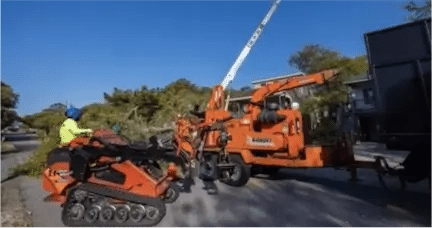
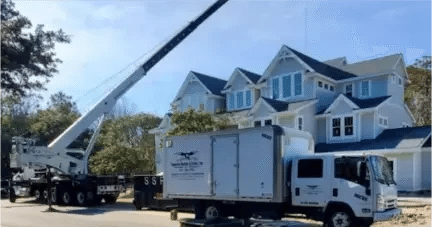
When a tree is sitting on your house or blocking your driveway, you need help right away. But the way our islands are built creates problems that mainland companies do not always understand. The biggest issue is the water. To get a crane to Kitty Hawk or Mateo, you have to cross a bridge. During a bad storm, the police often stop heavy trucks from crossing. If the wind is still blowing over thirty-five miles per hour, cranes are not allowed on the bridge at all. This means that while you have an emergency, the crane might be stuck on the other side of the water waiting for the wind to die down.
Even when the crane gets over the bridge, the roads are very narrow. Beach streets are often tight with deep sand on the edges and low power lines overhead. Driving a massive seventy-ton crane through a small neighborhood is a high-stress job. One wrong turn or hitting a soft patch of sand can get the crane stuck, which just makes the whole situation worse.
Why Sand and Cranes Do Not Mix
Most tree companies are used to working on hard dirt or grass. On the Outer Banks, we work on sand. A crane is only safe if the ground under it is solid. If you try to set up a crane on a beach lot without special mats, the legs of the machine will sink right into the ground. This is very dangerous because it can make the crane tip over onto the house it is trying to fix.
Crews in the 252 have to use heavy wooden pads or big plastic mats to spread the weight of the crane out. It takes extra time and gear to make sure the machine is stable in the sand. This is why you cannot just hire any company with a big truck; you need a team that knows how to work on a barrier island without causing more damage.
Why Beach Lots are Hard to Work On
Inland homes usually have big yards with plenty of space. On the Outer Banks, houses are packed close together to get those ocean views. This leaves very little room to move a crane arm or even park the support trucks. Many times, a crane has to reach over one house just to lift a tree off of another one.
This kind of work needs to be very exact. The person driving the crane and the workers on the ground have to talk constantly on the radios. One small slip or a sudden gust of wind can send a heavy log swinging into the house next door. Because our woods are so thick, there is often no place to drop the wood once it is lifted. Every piece has to be balanced and moved directly into a trailer. It is a slow and careful process that needs the right equipment.
The Real Reason It’s Tough to Get a Crane to Your Yard After a Storm
Handling a tree emergency on the Outer Banks takes more than just a big truck; you need a team that knows the islands inside and out. Albemarle Crane Service is uniquely equipped to handle these challenges safely and efficiently. Here’s why getting a crane to your property is so difficult, and how we overcome it:
- Bridge Access: High winds often close bridges to heavy trucks during storms, but our local fleet and expertise ensure rapid deployment when conditions allow.
- Sand Problems: Coastal soil can’t support heavy machinery without mats. Our team uses specialized ground pads to prevent cranes from sinking or tipping.
- Tiny Yards: Many beach lots are small and tightly packed. Thus, we use precise rigging, and skilled operators can maneuver cranes in even the most crowded spaces.
- Low Wires: Low-hanging power lines are a hazard for crane operations, but our experienced crews plan lifts carefully to avoid contact.
- Shifting Winds: Coastal gusts can change in seconds. That’s why Albemarle Crane Service monitors conditions closely to keep every lift safe.
- Salty Air: Salt can damage equipment. Thus, we have designed our cranes in such a way that they can withstand coastal corrosion, reducing breakdowns.
- High Demand: After storms, local crane services are in high demand. Being a homegrown company, Albemarle Crane Service is ready to respond quickly when every minute counts.
Frequently Asked Questions
1. Why can a crane not cross the bridge during a storm?
Bridges have wind limits for safety. If the wind is too strong, a tall crane truck could blow over and block the road, so they stay closed until the wind drops.
2. Will a heavy crane crack my driveway or septic tank?
It is a risk in our area since septic tanks are often in the front yard. A local pro will find your tank first and use heavy mats to protect your driveway and utilities.
3. Does a crane job cost more than a normal tree removal?
Yes, because it takes more gear and more people to do it safely. But it is much faster and safer when a tree is in a dangerous spot, like on top of a house.
4. How do you keep a crane from sinking in the sand?
We use giant timber mats that act like snowshoes for the truck. They spread the weight out so the machine stays level while it is lifting heavy trees.
5. Can you use a crane in the rain?
We can as long as the wind is low and there is no lightning. Rain makes the sand even softer, so we have to be extra careful with the ground mats.
6. Do I need a permit to get a tree off my house?
Most towns in the 252 let you move a tree right away if it is dangerous. We help with the paperwork so you can focus on your home.
7. How long does it take to remove a tree with a crane?
Most emergency jobs take about four to eight hours, depending on how big the tree is and how much space we have to work.
8. Why should I avoid hiring an out-of-town company?
Companies from the mainland often do not know about our soft sand or bridge rules. They might get stuck or use a gear that is not safe for the beach.
Summary Checklist: Emergency Tree Safety
| Condition | Risk Level | Recommended Action |
| A tree resting on your roof | Critical | Leave the area immediately and call for emergency crane removal |
| Tree leaning toward power lines | Critical | Stay at least 30 feet away and contact your local power company |
| Large cracks in the trunk | High | Keep people and vehicles clear until a professional inspects it |
| Tree blocking your driveway | High | Arrange removal quickly to keep access open for emergency vehicles |
| Branch hanging over a walkway | Moderate | Block off the area and schedule prompt removal |
Final Advice
When a tree is leaning on your house, blocking a driveway, or creating a hazardous situation on the Outer Banks, getting the right crane and team on site quickly is critical. Albemarle Crane Service combines local knowledge, specialized equipment, and certified operators to handle even the toughest emergency tree removals. Our crews use ground mats to stabilize cranes on soft sand, plan lifts around tight lots and low wires, and monitor coastal winds to ensure every job is safe and precise. Don’t risk injury or property damage by waiting for a mainland company or attempting a DIY removal. For a fast, professional response that keeps your family and home safe, contact us today at (252) 999-9110.