Key Takeaways
- Hurricanes and coastal storms leave trees leaning, split, or partially uprooted over homes.
- Manual removal is often unsafe when a tree is already unstable and close to a structure.
- Cranes lift and remove trees in controlled pieces, keeping weight away from roofs and windows.
- Rigging and load calculations account for wind, tree weight, and property layout before any cut is made.
- Fast, professional response reduces the chance of a damaged tree causing further loss after a storm.
After a hurricane moves through the coast, the danger doesn’t always end when the wind dies down. Trees that were bent, cracked, or partially uprooted during the storm often remain standing, leaning against rooflines or resting on decks in a fragile, unpredictable state. For beach house owners, that leftover damage can be more dangerous than the storm itself, because the tree is no longer stable and any additional stress, from wind, added weight, or even vibration, can cause it to shift or fail without warning. This is where crane-assisted tree removal becomes essential. When a tree is too large, too unstable, or positioned too close to a structure for traditional removal methods, a crane allows the entire job to be handled with control and precision, keeping the home and everyone nearby out of harm’s way.
Why Hurricane-Damaged Trees Are So Dangerous
A tree that survives a hurricane rarely comes through unaffected. Root systems can be partially torn from saturated soil, trunks can develop hidden cracks, and heavy limbs can be left barely attached after high winds. Coastal soil, often sandy and loose, adds another layer of risk because it does not hold roots as firmly as denser inland soil, especially after heavy rain has saturated the ground.
When a damaged tree is also leaning against or resting on a beach house, the situation becomes even more delicate. The tree may be the only thing preventing a limb from crashing onto a roof, but it is also actively adding stress to that same structure. Removing it without a plan can allow sudden shifts in weight, which is exactly what crane-assisted removal is designed to prevent.
Why Standard Removal Methods Often Fall Short
Traditional tree removal usually relies on directional felling or a climber working through the canopy with a chainsaw and rigging lines. Both approaches depend on the tree behaving predictably, but storm-damaged trees rarely do. A trunk that looks stable may have internal fractures that a climber cannot see from the ground. A leaning tree may shift the moment weight is removed from one side.
Beach houses also tend to sit on tight lots, with decks, pools, walkways, and neighboring homes close by. There is often no safe direction to drop a tree, and no room to stage the wood as it comes down. In these situations, cutting the tree the traditional way risks the very structure the removal is meant to protect.
How Crane-Assisted Removal Works
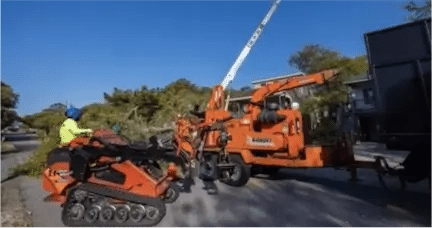
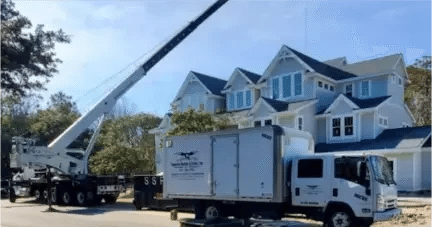
Cranes give tree crews a level of control that ground-based methods cannot match. Instead of relying on gravity and rigging alone, the crane lifts sections of the tree directly off the structure and carries them to a safe drop zone, piece by piece.
The process typically involves –
- Site Assessment: The crew evaluates the tree’s condition, nearby structures, and the safest location for crane setup.
- Strategic Crane Placement: The crane is positioned to provide maximum reach while minimizing impact on the surrounding property.
- Precision Rigging: Riggers secure specific sections of the tree before any cuts are made to ensure controlled lifting.
- Controlled Section Removal: Each limb or trunk section is cut and lifted directly away from the roof, deck, or other structures instead of being allowed to fall.
- Safe Weight Management: The crane supports the tree’s weight throughout the process, preventing sudden drops, swinging limbs, or uncontrolled movement.
- Protection for Property: This controlled approach minimizes the risk of additional damage, making it the safest option for hurricane-damaged or unstable trees near homes.
Protecting the Beach House During Removal
Coastal homes often have features that make removal more complicated, including – elevated decks, screened porches, pilings, and landscaping close to the foundation. A crane allows the crew to work above these features without needing to walk heavy equipment or dropped wood across them.
Because the crane lifts each section vertically before moving it, there is far less chance of debris scraping across siding, cracking windows, or denting a roof on the way down. This is especially important on beach properties where roofing materials and exterior finishes are often more exposed to wind and salt damage already, and additional impact damage could compromise areas already weakened by the storm.
Assessing Wind, Weight, and Access Before the Lift
Every crane removal begins with careful planning, not just for the tree, but for the environment around it.
- Coastal wind patterns can shift quickly, and a crew has to account for gusts that could affect a suspended load.
- Soft or sandy ground near the shoreline also affects where a crane can safely be positioned, since stability underneath the crane matters as much as the rigging above it.
- Weight distribution across the tree is calculated before any cutting begins. Larger, heavier sections are typically removed first if it improves the tree’s balance, or last if removing them early would destabilize the remaining trunk. Every decision is based on reducing risk to the structure, the crew, and anyone nearby.
Speed Matters After a Storm
Once a hurricane passes, homeowners are often dealing with multiple issues at once, from water intrusion to roof damage to downed power lines. A tree hanging over the house adds urgency, because every additional day it remains in place is another day it could shift, drop a limb, or fall entirely.
Professional crane removal crews prioritize storm response because delays increase risk. A tree that appears to be holding steady can change quickly if wind returns, if rain continues to saturate the soil, or if the tree’s internal damage worsens over time. Fast, safe removal reduces the window where a home is exposed to secondary damage.
When a Crane Is the Right Call
Not every fallen or damaged tree requires a crane, but several signs suggest one is the safer option:
- the tree is resting on or leaning against the home
- the trunk or major limbs show visible cracking
- there is no safe direction to fell the tree on the ground
- the property has limited access for heavy equipment.
Coastal lots, with their tight setbacks and elevated structures, often meet several of these conditions at once. An experienced tree service firm in Kitty Hawk, NC can evaluate the tree on-site and determine whether crane-assisted removal is necessary or whether a more traditional approach will do the job safely. That evaluation should always come before any cutting begins.
Why Experience Matters for Coastal Storm Work
Removing a hurricane-damaged tree from a beach house is not a job for guesswork. It requires rigging expertise, an understanding of storm-weakened wood, and the ability to read a tree’s structural condition accurately under pressure. It also requires equipment operators who understand how coastal wind and soil conditions affect crane placement and load handling.
Albemarle Crane Service works with homeowners and property managers who are dealing with storm-damaged trees along the coast. Every job starts with a full assessment of the tree, the structure, and the surrounding property before any equipment moves into position. The goal on every call is the same: remove the hazard without adding to the damage the storm already caused. For more information, call our team at – (252) 999-9110 to Book Your Free Estimate !!
Frequently Asked Questions About Crane Removal of Hurricane-Damaged Trees in North Carolina
How do I know if a storm-damaged tree needs a crane instead of standard removal?
If the tree is resting on or leaning against the house, has visible trunk cracking, or has no safe area to fall, crane removal is usually the safer choice.
Is crane removal more expensive than traditional tree removal?
It can cost more upfront, but it typically reduces the risk of additional property damage, which often makes it the more cost-effective option for high-risk trees.
Can a crane be used on tight beach lots with decks and pools?
Yes. Cranes are often chosen specifically because they can lift sections vertically, avoiding decks, pools, and landscaping that ground crews would otherwise have to work around.
How long does crane-assisted removal usually take?
Timing depends on the tree’s size and condition, but most residential jobs are completed within a single day once the crane is positioned and rigging is set.
Is it safe to wait a few days before removing a leaning tree after a storm?
Waiting adds risk. Wind, rain, and continued soil saturation can cause an already unstable tree to shift or fail without warning.
Summary Checklist: Hurricane Tree Removal With a Crane
| Task | Priority | Recommended Action |
| Assess Tree Stability and Lean | Critical | Inspect for trunk cracks, root movement, and the direction of the lean before any work begins. |
| Evaluate Access and Crane Placement | High | Verify ground stability and ensure adequate clearance around decks, pools, docks, and pilings. |
| Plan Rigging and Lift Sequence | Critical | Identify the safest order for removing sections based on weight, balance, and structural integrity. |
| Protect Nearby Structures | High | Lift tree sections vertically away from roofs, decks, siding, and other nearby structures. |
| Schedule Removal Promptly | High | Minimize exposure to wind, rain, and additional tree movement by removing the hazard as soon as possible. |
Final Advice
A hurricane-damaged tree hanging over a beach house is not a problem that improves with time. Wind, rain, and soil saturation can all make an unstable tree worse, and the closer it is to the home, the higher the stakes. Crane-assisted removal gives homeowners a safer path forward, allowing even large, precariously positioned trees to be taken down in controlled sections without adding new damage to an already stressed property.
If a storm has left a tree leaning over your home, do not attempt to manage it alone or wait to see if it holds. A professional evaluation can determine the safest way to remove it, whether that means a crane, traditional rigging, or a combination of both. Contact Albemarle Crane Service at (252) 999-9110 to schedule a storm damage assessment and get your property back to safe condition.