Key Takeaways
- Many Kill Devil Hills backyards have gates, fences, or side-yard access too narrow for a standard shed delivery trailer.
- A crane lift skips the gate entirely, lifting the shed up and over fences, landscaping, and other obstacles.
- Wind is a major factor when lifting a large, flat-sided structure like a shed, especially this close to the coast.
- Precise placement over a prepared pad or gravel base avoids the need for costly reworking after delivery.
- Crane delivery works for both new shed installations and relocating an existing shed to a new spot on the property.
- Planning boom angle and swing path around a home, fence, and neighboring yards keeps the lift safe from start to finish.
The shed may be the right size for your storage needs, but the path into the backyard may be too narrow. A fence may block the side yard. The gate may be only a few feet wide. There may also be trees, landscaping, air-conditioning equipment, or a house standing between the driveway and the spot where the shed needs to go. This is a common problem in Kill Devil Hills. Many residential properties have fences and limited side-yard access. A shed that cannot fit through the gate may seem like it has to be returned or require part of the fence to be removed. A crane provides another option.
Instead of trying to move the shed through the yard, a crane can lift it from the delivery trailer, carry it over the fence or other obstacles, and lower it directly into the backyard. This allows the shed to reach a location that may be impossible to access with a trailer or other ground equipment. The key is careful planning. The crane needs enough reach and lifting capacity, the shed must be properly supported, and the crew needs to account for wind, overhead lines, trees, buildings, and the final placement area.
Why a Shed May Not Fit Through the Gate
The first problem is usually access. A shed can be relatively small compared with a house or garage, but it can still be too wide to pass through a residential gate. Even if the shed technically fits through the opening, there may not be enough room to turn it or move it around the side of the house. For example, a homeowner may have a six-foot gate but order an eight-foot-wide shed. Removing the gate could make the opening wider, but the fence may still leave very little room to maneuver the structure.
The same problem can happen when a house sits close to the property line. There may simply be no clear path from the driveway to the backyard. In these situations, lifting the shed over the obstacle can be much easier than trying to create a temporary path through it.
How a Crane Gets the Shed Into the Backyard
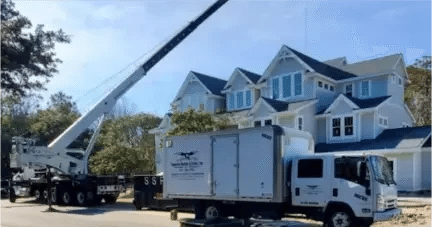
The basic process is straightforward, but every property requires its own lifting plan. The crane is normally positioned in the driveway, street, or another suitable area with enough space for the outriggers and equipment. The crew then determines how far the crane needs to reach to pick up the shed and place it in the backyard. The shed is secured with properly positioned lifting straps. The straps need to support the shed without putting excessive pressure on the walls, roof, or other parts of the structure.
Once the shed is ready, the crane lifts it from the trailer and slowly moves it over the fence, house, trees, or other obstacles along the planned path. The ground crew uses tag lines and communication with the crane operator to help control the shed as it moves. The operator then lowers the shed onto the prepared pad, gravel base, skids, or other designated location. The goal is to make the entire movement controlled and predictable. The shed should not be dragged across the yard or dropped into position and adjusted afterward.
Why the Crane’s Position Matters
A crane cannot simply park anywhere and reach the backyard. The distance between the crane and the shed affects how much weight the crane can safely lift. The farther the load is from the crane, the more the available lifting capacity can change. That means the crew needs to consider the crane’s position before the lift begins. They may look at the distance from the driveway to the shed location, the height of the house, the width of the backyard, and any obstacles along the boom’s path.
The swing path also matters. The shed may need to travel over part of the house or fence before reaching its final position. The crew needs to make sure there is enough clearance throughout that movement. A good lift plan prevents the crane from having to reposition after the shed is already suspended.
Wind Can Make Shed Lifts More Difficult
Wind is one of the biggest factors to consider when lifting a shed. A shed has a large surface area. Once it is lifted off the trailer, wind can push against its walls and roof like a sail. This can make the structure harder to control, especially when it is being moved over a fence or close to a house. This is particularly important in coastal areas such as Kill Devil Hills.
A lift that looks easy when the shed is sitting on the ground can become much more challenging once the structure is several feet in the air. The crew needs to consider current weather conditions before and during the lift. If wind conditions become unsuitable, the safest choice may be to delay or reschedule the work. Good planning is not just about getting the shed into the backyard. It is about making sure the shed can be controlled throughout the entire lift.
Preparing the Backyard Before Delivery
The final placement area should be ready before the shed is lifted. If the shed is going onto a concrete pad, the pad should be finished and accessible. If it is going onto gravel or another prepared base, that area should also be ready before the delivery truck and crane arrive.
The crew should also have enough room to lower the shed into place without hitting trees, fences, outdoor equipment, or other structures. This is important because a crane can place a shed very precisely, but it cannot fix a poorly prepared landing area. Planning the final location in advance also reduces the amount of time the shed has to remain suspended.
Checking Trees, Power Lines, and Other Obstacles
Residential properties often have obstacles that are easy to overlook from the ground. Trees may extend into the crane’s working area. Power lines may cross the driveway or run along the property. A roofline may interfere with the planned boom path. The crew needs to identify these obstacles before the lift begins.
Trees are especially important because branches can interfere with the crane boom or the shed as it moves through the air. Power lines require even more attention because the crane and load must be kept clear of electrical hazards. A site review helps identify these issues before the delivery truck arrives. It also gives the crew an opportunity to determine whether the original lifting position needs to be changed.
What If the Shed Is Already in the Yard?
Not every crane shed job involves a new delivery. Sometimes an existing shed needs to be moved to another part of the property. A homeowner may be adding a pool, building an addition, changing a fence, or simply moving the shed to create more usable yard space. Moving an existing shed requires additional care.
Older sheds may have weakened floor framing, damaged corners, or other structural problems that are not obvious from the outside. A shed that has been sitting in one location for years may also have settled into the ground. Before lifting it, the structure should be inspected to make sure it can handle the forces involved in the move. The lifting points and straps must be positioned so the structure stays supported as it leaves the ground. If additional reinforcement is needed, that should be addressed before the lift begins.
Choosing the Right Crane
The size of the shed is only one part of choosing the right crane. The crew also needs to know how far the crane will be from the shed, how high the load needs to travel, and how far it must move horizontally before reaching the final location.
A smaller shed that is close to the crane may require much less capacity than a larger shed that must be lifted over a two-story home. The crane also needs enough boom reach to complete the lift without operating outside its rated capacity. This is why it is useful to hire a professional crane service firm in Kill Devil Hills, North Carolina and provide them with the shed’s dimensions and weight, along with photos or measurements of the property. These details help the crew determine what equipment and setup will work before delivery day.
Coordinating With the Shed Supplier
A smooth shed delivery often requires coordination between the homeowner, shed supplier, delivery driver, and crane crew. The shed needs to arrive at the right time and be positioned where the crane can safely pick it up. The crane also needs to be ready before the shed is unloaded. If these steps are not coordinated, the shed may sit on the trailer while the crane waits, or the crane may arrive before the shed is ready.
For larger or more complicated deliveries, it is better to plan the crane lift while ordering the shed rather than waiting until delivery day. The shed supplier can provide the structure’s weight and dimensions, while the crane company can review the property and determine how the lift can be completed.
Can a Crane Lift a Shed Over a House?
In some properties, yes. Whether a shed can be lifted over a house depends on the crane’s capacity, boom length, required radius, the shed’s weight, the height of the structure, and the surrounding conditions. A two-story house, for example, may require considerably more boom reach than a single-story home.
The crew must also account for power lines, trees, roof structures, and neighboring properties. This is why a crane lift should be planned around the actual property rather than based only on the shed’s dimensions.
What Makes Kill Devil Hills Shed Delivery Different?
Kill Devil Hills has many properties where access can be limited by fences, landscaping, narrow side yards, and nearby homes. Coastal weather adds another consideration. Wind can change quickly, and large sheds are particularly sensitive to gusts once they are suspended. The combination of tight residential access and coastal conditions makes proper planning important.
A crane does not simply make the shed lighter. It changes the way the shed can reach the backyard. Instead of needing a clear ground-level path, the structure can travel through the air along a carefully planned route.
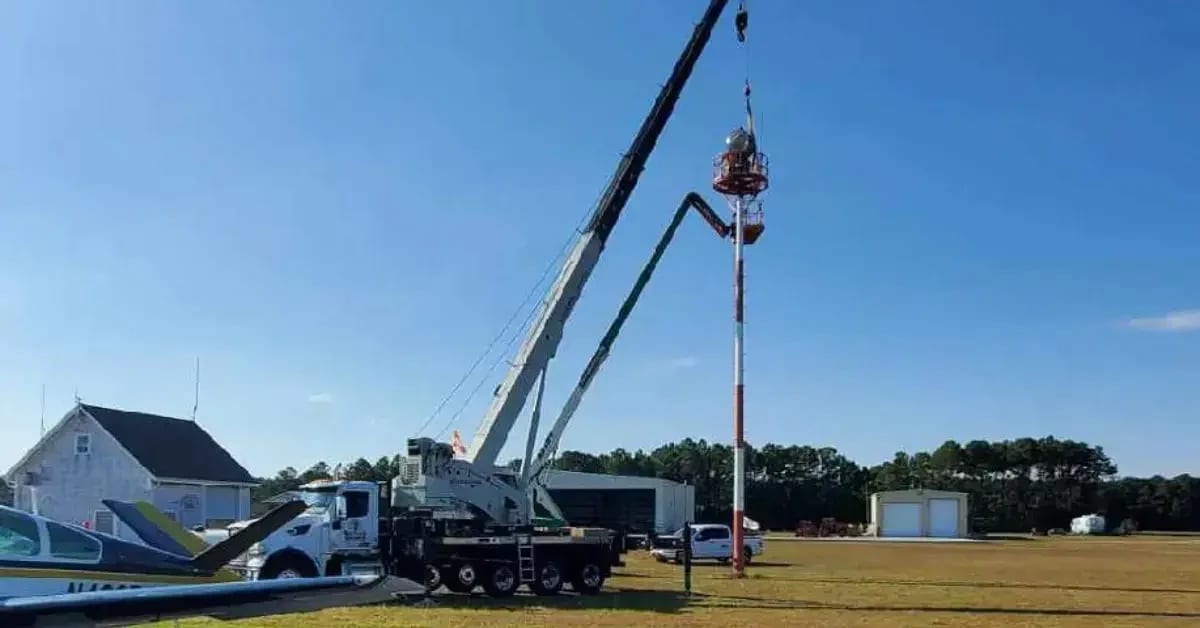
When a shed cannot fit through a gate or reach the backyard by ground, Albemarle Crane Service provides a practical lifting solution. We assess the shed’s weight, crane position, required reach, and site obstacles before each lift. Our fleet includes a 26-ton Altec boom truck with a 102-foot boom, with larger equipment available when needed. Our operators carefully account for trees, fences, overhead lines, wind, and existing structures to complete the lift safely and efficiently.
Frequently Asked Questions About Crane Shed Delivery in Kill Devil Hills
My shed is too wide for my gate. Can a crane still deliver it?
In many cases, yes. A crane can lift the shed over the fence or other obstruction instead of trying to move it through the gate. The property must still have a suitable location for the crane and enough clearance for the planned lift.
Can a crane place a shed directly onto a concrete pad?
Yes. The pad should be completed and ready before the lift. The crew can then lower the shed directly onto the prepared location.
Can you move an existing shed?
A crane can sometimes relocate an existing shed, but its condition needs to be checked first. Older sheds may have weakened framing or other structural issues that affect how they can be lifted.
How much space does a crane need?
The required space depends on the crane, shed weight, lifting distance, and property layout. The crane needs enough room to set up its outriggers and enough clearance to safely operate its boom.
What happens if it is windy on delivery day?
Wind conditions are checked before and during the lift. Because sheds have large flat surfaces, strong or gusty conditions can make them difficult to control. If conditions are not suitable, the lift may need to be delayed.
Can the crane lift a shed over a house?
Potentially. The crane’s boom must have enough reach and capacity for the required height and distance. Trees, power lines, rooflines, and neighboring properties must also be considered.
Summary Checklist: Key Requirements of a Safe Crane Shed Delivery
| Factor | Why It Matters | Priority |
| Property and access review | Identifies gates, fences, trees, and other obstacles | High |
| Shed weight and dimensions | Helps determine the correct crane and rigging | High |
| Proper lifting straps | Keeps the shed supported and balanced | High |
| Wind monitoring | Helps maintain control of the shed during the lift | High |
| Clear boom and swing path | Prevents contact with homes, trees, and power lines | High |
| Prepared landing area | Allows the shed to be placed without delays | High |
| Existing shed inspection | Identifies weak framing before relocation | Moderate |
| Coordination with supplier | Keeps the trailer and crane schedule aligned | Moderate |
Final Advice
A shed that cannot fit through your gate does not mean delivery must be cancelled. A crane can lift the structure over fences, narrow yards, landscaping, and other obstacles. Proper planning considers the shed’s weight, crane reach, wind, overhead hazards, and placement area. With the right setup, the shed can often be lifted directly from the trailer into the backyard.
If you are ordering a shed for a Kill Devil Hills property, measure your gate and side-yard access before delivery. If the shed will not fit, ask about crane delivery early. Planning ahead can save you from having to change the property or deal with an unexpected delivery problem. Albemarle Crane Service’s experienced operators can help plan the lift based on your property’s access, obstacles, and placement requirements.
Reviewed by a Certified Crane Operator
This article has been reviewed by an NCCCO-certified crane operator at Albemarle Crane Service to ensure the information about crane setup, shed rigging, wind considerations, and residential lifting reflects current field practices.