Deciding on the right crane rental duration can significantly impact your project’s budget and timeline. For contractors, project managers, and homeowners across North Carolina, the choice between a half-day and a full-day crane rental often comes down to more than just hourly rates. Understanding the nuances of each option is crucial for efficient planning and cost control.
Key Takeaways
- Half-day rentals (4-hour minimum) suit quick, straightforward lifts, while full-day rentals (8-hour minimum) are better for complex or extended projects.
- Factor in ‘portal-to-portal’ billing, mobilization, and demobilization costs, as these significantly affect the total price, often negating half-day savings for longer jobs.
- Accurate project planning and site assessment are essential to avoid overtime charges and ensure the chosen duration is truly cost-effective.
- Safety and compliance with OSHA and NCDOL standards, along with certified operators (NCCCO), are non-negotiable for any rental duration.
- Consulting with an experienced provider helps tailor the rental solution to your specific project needs.
What is a Half-Day Crane Rental?
A half-day crane rental typically refers to a minimum charge of 4 hours of service. This duration is designed for shorter, less complex lifting tasks that can be completed efficiently within this timeframe. It includes the time the crane spends traveling to your site, setting up, performing the lift, breaking down, and returning to the yard.
What is a Full-Day Crane Rental?
A full-day crane rental generally covers a minimum of 8 hours of service. This option is ideal for more extensive projects, multiple lifts, or jobs that require significant setup and breakdown time. Like half-day rentals, the 8-hour period includes all operational phases, from leaving the yard to returning.
Understanding ‘Portal-to-Portal’ Billing
Understanding ‘portal-to-portal’ billing is critical when comparing rental durations. This industry standard means the rental clock begins when the crane leaves the equipment yard and ends when it returns. It accounts for the non-lifting time associated with transporting heavy equipment safely to and from your job site in North Carolina. This billing method ensures all operational costs are covered, regardless of the actual time spent on-site. In coastal and inland North Carolina job sites, travel time alone can consume a large portion of a half-day rental window.
Key Factors Influencing Your Crane Rental Choice
Several critical factors influence whether a half-day or full-day crane rental is the most suitable and cost-effective choice for your project. Careful consideration of these elements can prevent unexpected expenses and project delays.
- Project Scope and Complexity: Simple, single-lift jobs versus multi-stage projects requiring varied rigging.
- Estimated Lifting Time: How long will the actual lifting operations take?
- Setup and Breakdown Requirements: The time needed to prepare the crane for operation and secure it afterward.
- Site Accessibility and Conditions: Difficult terrain or tight spaces can increase setup time.
- Ancillary Equipment Needs: Does the job require additional rigging, man baskets, or specialized attachments?
- Weather Contingencies: Unpredictable North Carolina weather can cause delays, potentially extending a half-day into a full-day or more.
The True Cost of Crane Rental: Beyond Hourly Rates
The actual cost of a crane rental extends beyond the quoted hourly rate. Several components contribute to the total expense, and understanding them is crucial for accurate budgeting.
Mobilization and Demobilization Fees
Mobilization and demobilization fees cover the cost of transporting the crane to your site and back. These are often fixed costs, regardless of the rental duration. For shorter half-day jobs, these fixed fees can represent a larger proportion of the total cost, potentially making a half-day less ‘cheap’ than it initially appears. Reliable providers factor these into transparent quotes.
Operator and Fuel Costs
The operator’s expertise is a significant part of the rental cost. Certified operators are highly skilled and ensure safe, efficient operations. Their wages are typically included in the hourly rate for both half-day and full-day rentals. Fuel costs, though variable, are also factored into the overall pricing structure.
Overtime Charges and Delays
If your project extends beyond the agreed-upon rental duration, overtime charges will apply. These rates are typically higher than standard hourly rates. Accurately estimating your project’s timeline, including potential delays, helps avoid these additional expenses. A buffer in your schedule is always recommended.
Safety and Compliance: A Non-Negotiable Aspect
Safety is the absolute priority in all crane operations. Adherence to strict regulatory standards protects workers, equipment, and the public. Professional rental services are fully committed to maintaining the highest safety protocols.
OSHA and Federal Regulations
The Occupational Safety and Health Administration (OSHA) sets federal standards for crane and derrick operations in construction. Specifically, 29 CFR 1926 Subpart CC – Cranes and Derricks in Construction outlines stringent requirements for operator certification, equipment inspection, and safety protocols. All reputable crane rental companies must comply with these federal guidelines.
North Carolina State Standards
In North Carolina, the Department of Labor (NCDOL) enforces state-specific safety regulations that complement federal standards. The North Carolina Department of Labor provides detailed safety standards for cranes and derricks, ensuring that all operations within the state meet rigorous safety benchmarks. This includes regular inspections and hazard identification.
Certified Operators and Training
Qualified crane operators should be certified by the National Commission for the Certification of Crane Operators (NCCCO). This certification ensures operators have demonstrated the knowledge and skills required for safe crane operation. Furthermore, professional teams regularly participate in ongoing training, often facilitated by institutions like NC State University’s Industry Expansion Solutions, which offers OSHA crane safety training, reinforcing best practices and awareness of critical safety issues.
Industry Best Practices and ASME Standards
Industry standards, such as those published by the American Society of Mechanical Engineers (ASME), provide guidelines for crane design, inspection, and operation. For mobile cranes, ASME B30.5 standards are widely recognized. These standards specify critical parameters like stability-limited rated loads, which are 75% for crawler cranes and 85% for cranes on outriggers. Adhering to these standards is fundamental to preventing accidents and ensuring reliable lifting operations.
When a Half-Day Crane Rental Makes Sense
A half-day rental can be the perfect solution for specific types of projects where efficiency and speed are paramount.
- Small Residential Lifts: Moving a hot tub, HVAC unit, or a large shed in a single, quick operation.
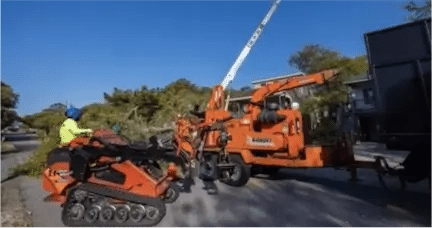
- Tree Removal: Lifting large tree sections after cutting, where the crane is only needed for a few hours.
- Quick Material Placement: Hoisting a single beam or a small pallet of materials to an elevated position.
- Limited Site Access: For jobs in urban areas where street closures or permits are time-sensitive.
- Emergency Services: Rapid deployment for urgent, short-duration tasks.
When a Full-Day Crane Rental is the Smarter Investment
For more involved projects, committing to a full-day rental often provides better value and operational flexibility, despite the higher upfront cost.
- Large Construction Projects: Erecting steel, placing trusses, or handling multiple heavy components over several hours.
- Complex Tree Removal: Multiple large trees, challenging access, or a need for precise placement of cut sections.
- HVAC or Roofing Installations: Jobs involving multiple units, long reaches, or coordination with other trades.
- Precast Concrete Placement: Setting numerous panels or structures requires careful sequencing.
- Extended Setup/Breakdown: Projects requiring significant time for crane assembly, counterweight installation, or intricate rigging.
- Unpredictable Conditions: When weather, site access, or coordination issues might cause delays, provide a buffer without immediate overtime charges.
Making the Right Decision: A Step-by-Step Guide
Making an informed decision requires a systematic approach. Experienced providers guide clients through this process to ensure the best outcome.
| Feature | Half-Day Crane Rental (4-Hour Minimum) | Full-Day Crane Rental (8-Hour Minimum) |
|---|---|---|
| Duration | Up to 4 hours, including travel and setup | Up to 8 hours, including travel and setup |
| Best For | Single lifts, small residential jobs, quick tasks | Multiple lifts, construction work, complex jobs |
| Cost Structure | Lower total cost, but setup fees take a larger share | Higher total cost, better value per hour |
| Overtime Risk | High if the job exceeds 4 hours | Lower, includes time buffer |
| Flexibility | Limited, requires tight planning | More flexible for delays or added work |
| Overall Value | Best for short, predictable jobs | Better for longer or uncertain projects |
1. Assess Your Project’s True Duration
Accurately estimate how long the actual lifting operations will take. Consider the number of lifts, the weight and dimensions of materials, and the required reach. Add buffer time for unexpected delays.
2. Evaluate Site Conditions and Accessibility
Evaluate the site for potential challenges. Are there power lines, tight spaces, soft ground, or other obstacles that could prolong setup and operation? These factors directly impact the time a crane spends on site.
3. Get Detailed Quotes and Understand All Costs
Request detailed quotes for both half-day and full-day options. Ensure the quote clearly outlines all costs, including mobilization, demobilization, operator fees, and any potential overtime rates. Compare the total estimated cost for each scenario, not just the hourly rate.
4. Prioritize Value and Safety Over Minimum Cost
Consider the overall value. A slightly higher full-day rate might be more economical if it prevents costly overtime or rushing the job. Safety should never be compromised to save a few dollars on rental duration.
5. Consult with Industry Experts
Speak with an experienced crane rental team. They can provide expert advice based on years of local project experience. Specialists can help you analyze your specific needs and recommend the most efficient and cost-effective rental duration.
How Overtime Happens on Short Crane Rentals
A common mistake is planning crane time based only on lift time instead of total portal-to-portal time. For example, a job expected to take two hours of lifting was booked as a half-day rental. Travel, setup, and breakdown pushed the total time past four hours, triggering overtime charges. The final cost ended up close to a full-day rate, but without the schedule flexibility.
Frequently Asked Questions
What does ‘half-day’ crane rental actually mean?
A half-day crane rental typically means a 4-hour minimum charge. This includes travel time to and from the site, setup, operation, and breakdown. It’s ideal for quick, straightforward lifting tasks.
Is ‘portal-to-portal’ billing standard for crane rentals in NC?
Yes, ‘portal-to-portal’ billing is standard in the crane industry. This means the rental clock starts when the crane leaves the equipment yard and stops when it returns. This accounts for the time and resources spent transporting the heavy equipment.
What factors influence the cost difference between half-day and full-day rentals?
Factors like crane size, lifting capacity, project complexity, site conditions, and the need for specialized rigging or personnel all influence the total cost. Mobilization and demobilization fees are also significant.
When is a half-day rental truly more cost-effective than a full-day?
For smaller, straightforward lifts that can be completed efficiently, a half-day rental can be more cost-effective. However, for complex jobs or those requiring multiple lifts, a full-day rental often provides better value due to fixed mobilization costs.
What certifications do professional crane operators hold?
Qualified operators should be certified by the National Commission for the Certification of Crane Operators (NCCCO). Reputable services also adhere strictly to OSHA and the North Carolina Department of Labor safety standards.
How can I accurately estimate the time needed for my crane project?
You should consider the actual lifting time, setup and breakdown requirements, travel time, and any potential delays. Always add a buffer to your estimated operational time to avoid unexpected overtime charges.
How to Choose the Right Crane Rental Duration for Your Project in North Carolina
Selecting the correct crane rental duration in North Carolina is a critical decision that impacts your project’s budget, timeline, and overall success. By carefully evaluating your project’s scope, understanding the true costs involved, and prioritizing safety, you can make an informed choice. Albemarle Crane Service is ready to provide expert guidance and reliable equipment for your next lift. Contact us today for a personalized consultation and quote.