Cranes are essential for modern construction, roofing, and heavy-lifting projects. But with so many crane types available, homeowners, contractors, and builders often wonder: which crane is best for the job? The answer depends on the project scope, site conditions, load weight, and accessibility. In this blog, we’ll break down the main crane options, their pros and cons, local considerations in the OBX, and how to choose the right one for your roofing, construction, or heavy-lifting needs.
Understanding the Role of Cranes in Home and Commercial Projects
Cranes are not just for skyscrapers; they’re invaluable for residential and commercial projects alike. From lifting roof trusses onto multi-story homes to setting beams in new builds or moving heavy materials in tight OBX neighborhoods, cranes simplify what would otherwise be dangerous, labor-intensive jobs. In many cases, they reduce the workforce needed, shorten project timelines, and prevent costly damage from improper lifting.
Cranes also play an essential role after storms, where they are used to remove heavy debris, stabilize compromised structures, and assist in recovery projects. For OBX homeowners, understanding crane applications can help in planning both preventive work and emergency response.
Main Types of Cranes for Roofing and Heavy Lifting
1. Mobile Truck Cranes
- Best for: Roofing jobs, general home projects, storm cleanup
- Advantages: Highly versatile, can travel on highways, quick setup, and affordable
- Limitations: Limited reach compared to tower cranes, less suitable for very tall projects
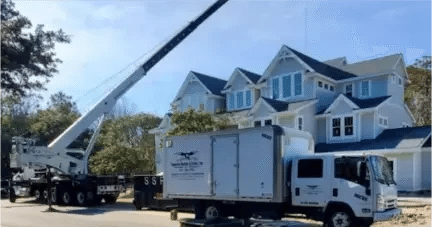
Mobile truck cranes are the most common rental option in the OBX. Mounted on trucks, they can maneuver into residential lots and lift roofing materials, HVAC units, and structural beams efficiently. They’re perfect for homeowners and contractors who need flexibility and fast results.
2. Rough Terrain Cranes
- Best for: Construction in sandy or uneven OBX soils
- Advantages: Designed for off-road stability, powerful lifting capacity, excellent traction
- Limitations: Cannot travel on highways without special transport, larger footprint
Rough terrain cranes excel in the OBX, where sandy soils and storm-damaged landscapes make access tricky. They are especially useful in post-storm recovery efforts when conditions are unstable.

3. All-Terrain Cranes
- Best for: Large-scale construction and long-distance projects
- Advantages: Combine mobility with off-road performance, high lifting capacity
- Limitations: Higher rental cost, requires more setup space
All-terrain cranes are a premium option for contractors handling major construction builds or complex heavy lifts. In OBX areas with both paved roads and soft ground, they offer the best of both worlds.
4. Tower Cranes
- Best for: High-rise or multi-story construction
- Advantages: Exceptional height and lifting capacity, ideal for long-term projects
- Limitations: Require assembly, longer setup times, not suitable for small sites
Tower cranes are less common for homeowners but ideal for developers building hotels, condos, or commercial structures in the OBX. Their stability and reach make them critical for urban-style developments.
5. Crawler Cranes
- Best for: Extra-heavy lifting on large construction sites
- Advantages: Massive lifting power, no need for outriggers, very stable
- Limitations: Slow-moving, requires disassembly for transport, higher cost
Crawler cranes are suited for major commercial builds rather than small home projects. They are often used in long-term construction where heavy loads need to be lifted repeatedly.
Which Crane Is Best for Roofing?
For roofing projects, mobile truck cranes are the go-to choice. They are compact, quick to set up, and capable of lifting shingles, trusses, and materials onto multi-level beach homes. In windy coastal areas like the OBX, having a crane that can operate safely in tight residential spaces is critical. Rough terrain cranes may also assist with roofing in cases where access is difficult or the soil is unstable.
Which Crane Works Best for Construction?
- Residential Construction: Mobile truck cranes or rough terrain cranes, depending on soil conditions and lot access.
- Commercial Construction: All-terrain or crawler cranes for heavy loads and complex builds.
- Multi-Story Buildings: Tower cranes for maximum reach and lifting, especially for condos and resorts.
In the OBX, the choice often comes down to property size, soil type, and project scale. For smaller lots or renovations, mobile truck cranes are sufficient. For new developments or large additions, heavier equipment may be necessary.
Which Crane Should You Use for Heavy Lifting?
If your project involves oversized or extremely heavy objects (like modular home sections, large HVAC units, steel beams, or storm debris removal), then rough terrain cranes or crawler cranes are ideal. For residential heavy lifting, truck-mounted cranes are often enough, especially when used by certified operators who can ensure safety and precision.
Crane Types Compared: Mobility, Capacity, and Best Uses
Local Considerations in the OBX
The Outer Banks have unique environmental and logistical challenges:
- Sandy soils require stable cranes, such as rough terrain or crawler models.
- Narrow residential lots make mobile truck cranes more practical.
- Frequent storms mean cranes are often used for emergency response and debris removal.
- Tourism-related development drives demand for larger cranes in commercial projects.
Local crane companies understand these conditions and can recommend the best equipment based on site access and safety requirements.
Safety and Compliance When Using Cranes
No matter which type of crane you choose, safety and compliance should always come first. Every lift must follow OSHA standards for cranes and derricks in construction, with certified operators on site. For residential areas in the OBX, extra care is required when working near power lines, roads, or neighboring properties. Proper rigging, ground stability checks, and load charts are critical for preventing accidents. For a deeper technical overview of various machines, explore the evolution of crane technology and types. Always confirm that your crane provider is insured, licensed, and up to date with local regulations before starting work.
Cost Factors to Consider in Crane Rentals
Crane rental costs vary depending on the crane type, project length, and site conditions. Mobile truck cranes are generally the most affordable, with daily rates that suit short roofing or lifting jobs. Rough terrain, all-terrain, and crawler cranes are more expensive due to transport needs, setup time, and operator requirements. Tower cranes are the highest-cost option, often rented for weeks or months on large commercial builds. In the OBX, factors like soil preparation, storm recovery urgency, and narrow access can also influence pricing. Discuss your budget upfront with your crane service provider to avoid unexpected expenses. For official training and certification guidelines that impact professional labor costs, refer to the National Commission for the Certification of Crane Operators (NCCCO).
FAQs on Choosing the Best Crane
What crane is most commonly used for roofing?
Mobile truck cranes are affordable, easy to maneuver, and ideal for residential projects.
Which crane is best for sandy or uneven soil in OBX?
Rough terrain cranes are built for off-road and challenging ground conditions, making them a top choice for coastal environments.
Do I need a certified operator with my crane rental?
Yes. Certified operators ensure safety and compliance, which is especially important for residential neighborhoods and construction regulations.
Can I use one crane type for both roofing and heavy lifting?
Yes, mobile truck cranes often cover both roofing and moderate heavy lifting, making them the most versatile choice for homeowners and small contractors.
How do I know which crane my project requires?
Consult with a local crane rental company. They will assess load weight, height requirements, soil stability, and site access to recommend the best option.
Are permits required for crane use in residential areas?
In some OBX towns, permits are needed if a crane blocks a roadway or public access. Always confirm with your service provider.
How often are cranes used for storm recovery in the OBX?
After major storms, cranes are among the first pieces of equipment deployed to remove dangerous debris and assist in emergency repairs.
Choosing the Right Crane for OBX Projects
The right crane depends on your project’s unique needs. For most OBX homeowners, a mobile truck crane is the most practical option, balancing cost, efficiency, and safety. For contractors handling larger builds or extreme heavy lifting, rough terrain, crawler, or all-terrain cranes may be required. Tower cranes are ideal for long-term multi-story builds.
Don’t just rent any crane; match the type to your roofing, construction, or heavy-lifting needs for the best results. Consider soil, access, load weight, and project scale when making your choice.
Need a crane in the OBX?
Contact Albemarle Crane Service for expert guidance, certified operators, and equipment built for local conditions.