Tree removal in the Outer Banks is not the same as tree removal inland. Coastal conditions, soil composition, wind exposure, and local environmental rules change what is safe, legal, and practical. When trees become large, damaged, or unstable, traditional climbing methods often create more risk than control. This is where boom trucks and crane-assisted removal become the safest option.
This guide explains when boom truck tree removal is required, how it works, why it matters in the Outer Banks, and what homeowners should realistically expect from the process.
Key Takeaways
- Boom trucks provide controlled, sectional removal for large or unstable trees.
- Coastal winds, sandy soil, and salt exposure weaken trees faster than in inland areas.
- Many Outer Banks towns regulate tree removal by size, species, and location.
- Crane-assisted removal reduces risk to workers, homes, and utilities
- Higher cost reflects lower liability, faster completion, and fewer mistakes
Why Tree Removal Is More Complex in the Outer Banks
The Outer Banks presents a unique mix of environmental stressors and land-use rules that directly affect tree stability and removal safety.
Trees here often grow in sandy, shifting soil with limited root anchoring. NOAA explains that barrier islands like the Outer Banks are constantly changing deposits of sand, which affects root stability. Strong winds from hurricanes and nor’easters create hidden structural damage long before a tree visibly fails. Salt spray accelerates decay and brittleness, especially in older or exposed trees. Coastal erosion can leave root systems partially exposed or compromised.
These factors mean a tree that appears stable from the ground may be unsafe to climb. In these cases, boom trucks allow removal without placing workers inside a compromised canopy.
What a Boom Truck Does in Tree Removal
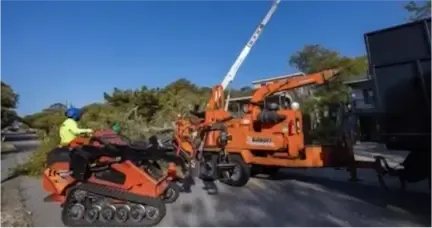
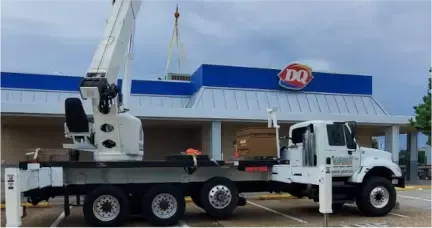
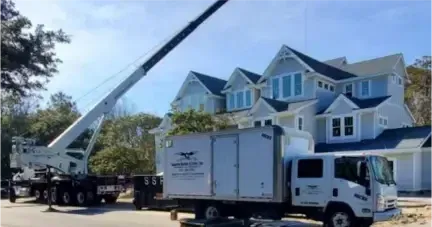
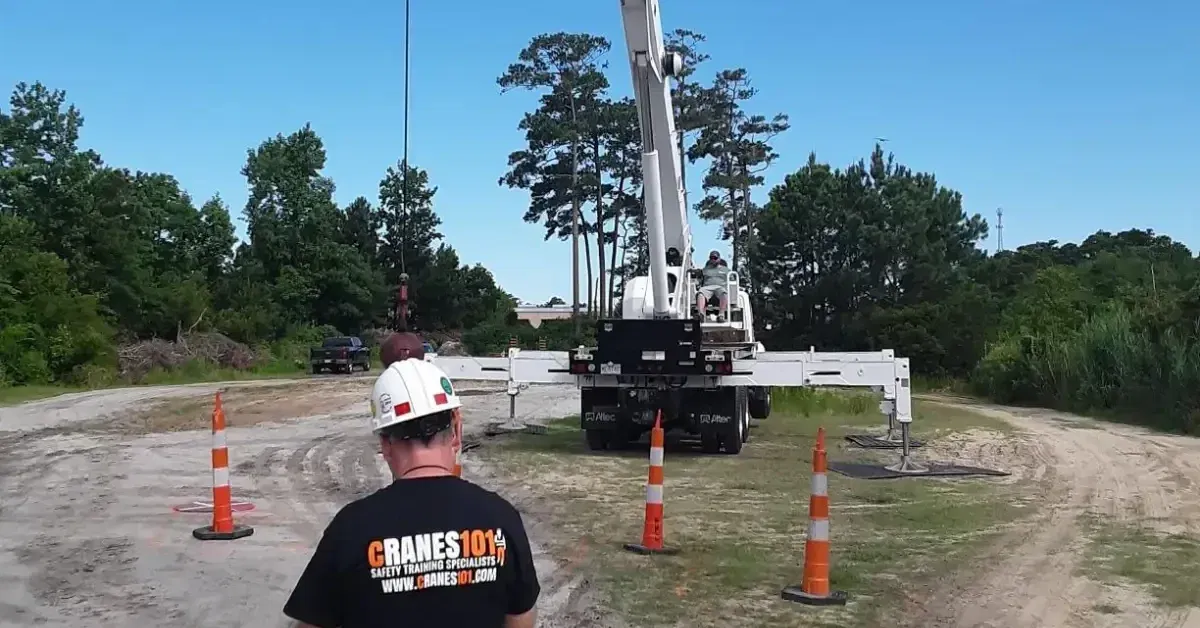
A boom truck is a heavy-duty vehicle equipped with a hydraulic lifting arm that extends vertically and horizontally. Depending on the setup, arborists either work from an elevated basket or attach rigging directly to the crane hook.
Boom trucks differ from standard bucket trucks in two important ways:
- They handle significantly heavier loads
- They offer greater reach and rotational control
This allows large limbs and trunk sections to be lifted away from structures rather than dropped or manually lowered. In high-risk environments like the Outer Banks, that control is critical.
When Traditional Climbing Is Not Enough
Traditional climbing still has a place in tree care, particularly for pruning or removals in tight areas with stable trees. However, climbing becomes unsafe or inefficient when:
- The tree is dead or partially decayed
- Storm damage has split the trunk or major limbs
- The canopy contains hanging or tension-loaded branches
- The tree leans toward a structure
- There is no clear drop zone
In these situations, a climber is exposed to unpredictable failures. Boom trucks reduce or eliminate that exposure.
Local Regulations That Influence Equipment Choice
Tree removal in the Outer Banks is regulated at the town level. Equipment choice often affects whether a project can be approved or completed legally.
- Duck: Trees over 24 inches DBH require permits. Properties below minimum vegetation coverage face stricter controls.
- Nags Head: Many removals over 6 inches DBH require approval. Certain species are protected, and penalties apply for improper removal.
- Kill Devil Hills: Maritime Forest Environmental Districts heavily restrict tree removal. Violations can carry daily fines.
Boom trucks allow sectional removal with minimal ground disturbance. This helps preserve surrounding vegetation and comply with site-specific requirements.
Coastal Conditions That Increase Removal Risk
High Wind Exposure
Trees in the Outer Banks experience sustained wind stress. Even healthy trees develop internal cracks or weak attachment points over time. After storms, damage may not be visible, but it still poses a collapse risk during climbing.
Sandy Soil and Root Instability
Unlike compact clay or loam, sandy soil offers poor root anchoring. Trees rely on wide, shallow root systems that can shift or fail under load.
Salt Exposure
Salt spray dehydrates foliage and accelerates wood decay. Branches become brittle and unpredictable, increasing the chance of sudden breakage.
Coastal Erosion and Flooding
Changing shorelines and saltwater intrusion weaken root systems. Dead or dying trees, sometimes called ghost forests, are especially dangerous to climb.
Boom Truck vs Traditional Climbing
Safety
Boom trucks keep workers off compromised wood. Arborists operate from stable platforms or from the ground, reducing fall risk and exposure to failing limbs.
Control
Large sections are lifted vertically and moved horizontally away from homes, fences, decks, and power lines. This eliminates uncontrolled drops.
Speed
What may take hours with manual rigging can often be completed in a fraction of the time with crane assistance. Less time on site means less exposure to risk.
Property Protection
Controlled lifting reduces lawn damage, foundation impact, and accidental contact with structures or utilities.
Trees That Commonly Require Boom Truck Removal
Boom trucks are commonly used for:
- Large mature oaks and pines
- Dead or declining trees
- Hurricane-damaged trees
- Trees leaning toward structures
- Trees growing through or over roofs
- Trees near power lines or roads
- Trees with limited drop zones
If a tree cannot be safely dismantled piece by piece using gravity alone, crane assistance is usually the safer option.
Understanding the Cost of Boom Truck Tree Removal
Boom truck removal typically costs more than standard climbing. This reflects equipment costs, operator skill, insurance requirements, and planning time.
Typical range in the Outer Banks:
Factors That Affect Pricing
Tree Size and Weight
Taller trees with dense wood require more lift capacity and time.
Location and Access
Limited access, soft ground, or narrow lots increase setup complexity.
Hazard Level
Dead, split, or storm-damaged trees require additional safety controls.
Proximity to Structures or Utilities
Trees over homes, decks, or power lines require precision lifting.
Permits and Planning
Permit coordination and vegetation plans may add administrative costs.
Debris Handling
Hauling, chipping, and cleanup scope affect final pricing.
Emergency Response
After-storm or urgent removals often carry higher rates.
What the Removal Process Looks Like
- Site Assessment: Tree condition, weight, hazards, and access are evaluated.
- Permit Coordination: Required approvals are obtained before work begins.
- Site Preparation: Work zones are secured. Ground protection may be installed.
- Equipment Setup: The boom truck is positioned and stabilized for safe lifting.
Sectional Removal: Tree sections are cut and lifted away in a controlled manner. - Debris Management: Material is chipped, hauled, or staged as planned.
- Cleanup: The site is cleared of debris and sawdust.
- Final Inspection: The area is checked for safety and completeness.
Why DIY or Low-Bid Removal Is Risky
Tree removal is one of the most dangerous residential services. Mistakes carry serious consequences. The Occupational Safety and Health Administration (OSHA) provides detailed safety guidance for tree care operations, including when aerial lifts and cranes are appropriate.
Common risks include:
- Uninsured crews create homeowner liability
- Improper cuts are causing uncontrolled falls
- Damage to roofs, siding, or utilities
- Permit violations and fines
- Injury or fatal accidents
Low bids often cut corners on insurance, equipment, or training. In high-risk environments like the Outer Banks, those shortcuts are costly.
When to Schedule a Professional Assessment
You should request a boom truck evaluation if:
- A tree shows signs of decay or cracking
- Storm damage is present
- The tree leans toward a structure
- Large limbs hang over roofs or decks
- There is no clear area for debris to fall
- You are unsure whether permits apply
Early assessment prevents emergency situations later.
Frequently Asked Questions
What is a boom truck in the context of tree removal?
A boom truck is a specialized vehicle equipped with a hydraulic crane arm used for lifting and moving heavy objects, including large tree sections. Tree removal, it allows arborists to safely access, cut, and lower heavy limbs and trunks from a distance, minimizing risk to ground crews and surrounding property.
How does a boom truck improve safety during tree removal?
Boom trucks significantly enhance safety by keeping crew members out of dangerous trees, especially those that are dead, diseased, or storm-damaged. They also allow for controlled lowering of heavy sections, preventing uncontrolled falls that could damage homes, landscapes, or utilities.
What’s the typical cost for boom truck tree removal in the Outer Banks?
Costs vary widely based on tree size, location, hazard level, and access. Expect prices to range from $1,500 to $5,000 or more for a complex boom truck removal in the Outer Banks. Factors like permit requirements and debris hauling also influence the final quote.
Are there permits required for tree removal with a boom truck in the Outer Banks?
Yes, many Outer Banks towns like Duck, Nags Head, and Kill Devil Hills have strict regulations on tree removal, especially for larger or protected species. Permits and vegetation plans are often required. Always check with your local planning department before any removal project.
Boom Truck vs. Traditional Tree Climbing: Which Is Safer for Outer Banks Properties
Choosing between traditional climbing and a boom truck for tree removal is not a matter of preference. It is a decision based on safety, control, and protecting the surrounding property. In the Outer Banks, where wind exposure, sandy soil, and storm damage are common, large or hazardous trees often require a more controlled approach. Boom truck removal allows heavy sections to be lifted away safely, reducing risk to workers, homes, and utilities. A professional assessment helps determine whether crane assistance is the safest option before conditions escalate into an emergency.