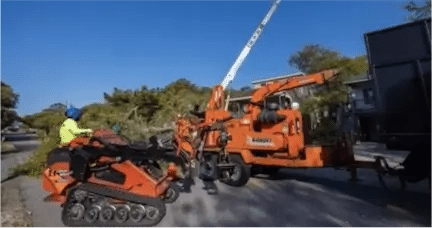
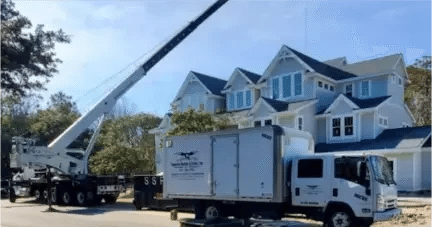
Removing a large tree near your home is risky. One wrong cut can damage roofs, fences, or power lines. That is where crane-assisted tree removal changes everything. Instead of dropping sections blindly, crews lift them out safely and place them exactly where planned. Crane-assisted tree removal is a method where a mobile crane lifts tree sections while arborists cut them. It is used for large, dangerous, or hard-to-reach trees near homes, power lines, or tight spaces because it allows controlled removal with minimal property damage.
Key Takeaways
- Crane-assisted tree removal uses heavy machinery to safely lift and remove tree sections, ideal for large or hazardous trees.
- It significantly enhances safety for both crews and property by eliminating manual lowering and minimizing risks.
- This method offers unmatched efficiency, completing complex removals faster than traditional manual techniques.
- Expertise in crane operations, load dynamics, and site safety sets specialized providers apart from general tree services.
- Choosing crane assistance is crucial for trees near structures, in confined spaces, or those compromised by disease or storm damage.
- Costs are influenced by tree size, location, and complexity, but the benefits often outweigh the initial investment.
What is Crane-Assisted Tree Removal?
Crane-assisted tree removal is a specialized process that utilizes a mobile crane to carefully lift and extract large sections or entire trees from a property. Instead of felling a tree piece by piece to the ground, which can be risky, the crane acts as a controlled extension, allowing certified arborists to make precise cuts while the crane supports the weight. This method is particularly valuable in situations where trees are large, diseased, storm-damaged, or located in hard-to-reach areas near homes, power lines, or other sensitive structures.
Why Choose Crane-Assisted Tree Removal?
Choosing crane-assisted tree removal provides distinct advantages in safety, speed, and minimizing disturbance. Prioritizing these benefits ensures superior results for homeowners and commercial property managers.
Enhanced Safety for Crew and Property
One of the primary reasons to opt for crane assistance is the dramatic increase in safety. By lifting heavy sections of the tree, the crane removes the need for ground crews to manually handle falling debris. This greatly reduces the risk of injury to workers and prevents damage to your home, landscaping, or other property. The crane provides a stable, controlled descent for each piece of the tree, ensuring that it lands exactly where intended. In fact, regulatory bodies like OSHA often highlight that using a crane can be the ‘safest feasible’ method for removing hazardous trees, emphasizing controlled operations over manual felling.
Unmatched Efficiency and Speed
Crane operations streamline the entire removal process. What might take days with traditional methods can often be completed in a matter of hours with a crane. This efficiency comes from the crane’s ability to lift large, heavy sections at once, reducing the number of cuts and lowering operations required. Fewer personnel are exposed to hazards for shorter durations, leading to faster project completion and less disruption to your daily life.
Minimal Property Impact
Traditional tree removal can leave a significant impact on your property, from rutted lawns to damaged flower beds. With a crane, tree sections are lifted directly from their position and placed gently into a designated drop zone or onto a chipper. This ‘fly-away’ method minimizes foot traffic and heavy equipment movement across your yard. Specialized precautions, such as using ground protection mats under outriggers, distribute weight and prevent damage to delicate soils and paved surfaces.
How Professionals Decide If a Crane Is Needed
Before a lift begins, professional crane operators and arborists conduct a technical evaluation. This ensures that the crane is the safest tool for the job based on environmental and structural variables.
- Tree Height vs. Drop Zone Space: Is there enough room to safely fell the tree, or must it be lifted out?
- Structural Weakness Level: Is the tree too unstable for an arborist to climb?
- Distance from Structure: Is the tree within the ‘target zone’ for a house or power line?
- Ground Load Bearing Capacity: Can the property support the weight of the crane and its outriggers?
- Wind Exposure: Are local wind conditions safe for high-profile crane lifts?
When Is Crane-Assisted Tree Removal Necessary?
While highly beneficial, crane-assisted removal isn’t always necessary. It becomes the optimal, and often the only safe, choice in specific challenging scenarios.
High-Risk or Hazardous Trees
Trees that are dead, diseased, or severely damaged by storms pose extreme risks. Their structural integrity is compromised, making them unpredictable and dangerous for manual climbing and cutting. A crane allows for the safe removal of these unstable trees without putting arborists at unnecessary risk.
Limited Access and Confined Spaces
Many properties, especially in urban or developed areas, have trees growing in confined spaces. These might be surrounded by fences, pools, sheds, or other landscaping features that prevent traditional felling. A crane can reach over these obstacles, lifting tree sections out without disturbing the surrounding environment.
Proximity to Structures or Utilities
When a tree is precariously close to your home, garage, power lines, or other critical infrastructure, manual removal carries a high risk of catastrophic damage. Crane assistance ensures that each section is carefully lifted away from these structures, guaranteeing a controlled and precise extraction.
How to Know If Your Tree Needs Crane Removal (Quick Checklist)
If you are unsure whether your project requires a crane, consider this checklist. If your tree meets any of these criteria, a crane is likely the safest option.
- The tree is significantly taller than your house or nearby structures.
- The tree has a heavy lean toward a building, fence, or pool.
- The trunk or major limbs are visibly dead, hollow, or decaying.
- The tree was recently compromised by storm damage or lightning.
- The tree is within 10 to 15 feet of critical utility lines or your home.
- There is no clear direction in which the tree can be safely dropped in one piece.
The Professional Removal Process: A Crane-First Approach
A high-level approach to tree removal goes beyond simply operating a crane; every project must be planned from a ‘crane-first’ perspective. This means meticulous planning and execution centered around the physics of the lift to ensure maximum safety.
Initial Site Assessment and Planning
Every project begins with a comprehensive site visit. Certified operators and arborists assess the tree’s size, weight, and condition, as well as the surrounding environment. Professionals analyze soil stability to determine optimal outrigger placement and ground pressure mitigation. Specialists meticulously calculate load charts for the crane’s capacity at various angles and distances to ensure the crane is never overloaded. This detailed planning is essential, particularly for ‘blind picks’ where the operator cannot directly see the tree section being lifted. Understanding general crane hazard awareness and establishing clear ‘evacuation zones’ are critical components of safety protocol, as detailed in resources like the Purdue University Extension’s Crane Safety Program.
Precision Rigging and Sectional Removal
Once the plan is in place, a skilled arborist ascends the tree, making precise cuts to segment it into manageable sections. Each section is then carefully rigged and attached to the crane’s hook. The crane operator, often communicating via headset with the arborist and ground crew, executes a controlled lift. This synchronized effort ensures that each piece is safely detached and moved. Compliance with industry standards like ANSI Z133 for arboricultural operations, which specifies safety requirements for tie-in points and rigging, is a core part of the methodology, ensuring every lift is performed to the highest safety benchmarks.
Controlled Lowering and Debris Management
With the tree section secured, the crane gently lowers it to a pre-determined drop zone. This zone is typically an open area where the section can be processed by ground crews, either chipped on-site or loaded onto trucks for disposal. This process ensures that all debris is efficiently managed and the property is left clean and tidy, minimizing any post-removal cleanup for the owner.
Crane-Assisted vs. Traditional Tree Removal: A Comparison
Understanding the differences between crane-assisted and traditional tree removal methods helps in making an informed decision for your property. Specialists provide a distinct advantage in complex removals.
| Feature | Crane-Assisted Tree Removal | Traditional Tree Removal |
|---|---|---|
| Safety | High control with lifted sections, lower risk to crew and property | Higher risk with falling limbs and manual cutting |
| Speed | Fast completion, often same-day for large trees | Slower, may take multiple days |
| Cost | Higher upfront due to crane and skilled crew | Lower upfront cost for simple jobs, risk of added damage costs |
| Property Impact | Minimal impact, sections lifted over structures | Higher chance of lawn, fence, or structure damage |
| Best Use Case | Large, hazardous, or hard-to-reach trees | Small to medium trees with open space |
| Access Capability | Can reach over homes, fences, and tight spaces | Needs a clear drop zone and ground access |
Understanding the Cost Factors of Crane Tree Removal
The investment in crane-assisted tree removal reflects the advanced equipment, specialized training, and enhanced safety protocols involved. Several factors influence the final cost:
- Tree Size and Type: Larger, denser trees require more powerful cranes and longer operational times.
- Location and Accessibility: Trees in tight spaces, over structures, or far from a clear setup area increase complexity and cost.
- Tree Condition: Dead, diseased, or storm-damaged trees are more unpredictable and require extra caution, impacting time and resources.
- Crane Type and Duration: The specific crane needed (e.g., boom length, lifting capacity) and the time it’s on-site directly affect pricing.
- Debris Removal: Whether the wood is chipped on-site, hauled away, or processed for firewood can influence the total cost.
- Permits and Regulations: Local regulations might require permits, adding to the project’s overall cost and timeline. General knowledge of arboriculture, as detailed on Wikipedia’s Tree Care entry, helps understand the scope of such projects.
Storm Failure Risk Reality
In coastal environments, storm-related tree failures often occur due to soil saturation and root plate instability rather than wind alone. Trees that appear structurally sound can fail suddenly once the ground holding strength is reduced. Attempting manual removal on saturated or compromised root systems increases the risk of uncontrolled tree movement during cutting. Crane-assisted removal allows controlled load management and vertical section removal, reducing the likelihood of unpredictable failure toward structures or utilities.
Selecting the Right Professional Partner
When a tree removal project demands precision, safety, and expertise, choosing a specialized crane provider is the premier choice. A dedicated crane specialist offers extensive experience in the unique challenges of tree removal, from deep knowledge of crane load dynamics to ground stability and intricate rigging techniques. This specialized focus ensures that every aspect of the project, from initial assessment to final cleanup, is handled with the highest professionalism and care. Reliability and safety depend on trusting those who view the process through a technical, safety-first lens.
Frequently Asked Questions
Is crane-assisted tree removal safer than traditional methods?
Crane-assisted tree removal is generally safer than traditional methods, especially for large or hazardous trees. It minimizes risks to ground crews and property by allowing controlled lowering of tree sections, reducing the need for climbers to make dangerous cuts.
How much does crane-assisted tree removal cost?
The cost varies based on tree size, location, complexity, and the type of crane required. While often more expensive upfront than manual removal, the increased safety and efficiency can offset costs by reducing labor hours and preventing potential property damage.
How long does a crane-assisted tree removal take?
The duration depends on the tree’s size, location, and complexity. However, crane assistance significantly speeds up the process compared to traditional methods, often completing jobs in hours that would take days manually.
Can a crane remove a tree without damaging my property?
Yes, cranes are ideal for removing trees in tight spaces or over structures like homes, sheds, or pools. The crane lifts sections directly over obstacles, preventing damage to surrounding property and landscaping.
Do I need a permit for crane-assisted tree removal?
Permit requirements for tree removal vary by local jurisdiction. It’s always best to check with your local city or county planning department before starting any tree removal project, especially for large or protected trees.
What happens to the tree debris after removal?
A professional team handles all aspects of the lift, including planning, execution, and debris management. Skilled crews work closely with certified arborists to ensure precise cuts and safe removal, leaving your property clean and clear.
Will the crane damage my lawn or driveway?
A professional team prioritizes minimizing ground impact. Specialists carefully assess soil conditions and use specialized mats or cribbing under outriggers to distribute weight, protecting driveways, lawns, and delicate landscaping.
When should I consider crane assistance for tree removal?
You should consider crane assistance for large, dead, diseased, or storm-damaged trees, especially if they are close to structures, power lines, or in areas with limited access for traditional methods.
The Safest Solution for Large or Hazardous Trees
Crane-assisted tree removal is a specialized, highly effective method for managing challenging tree situations. It prioritizes safety, minimizes property disruption, and offers unmatched efficiency, especially for large or hazardous trees. When facing a complex tree removal, choosing a partner with deep expertise in both arboriculture and heavy crane operations is critical. Albemarle Crane Service brings unparalleled experience in crane load dynamics and precision lifts, ensuring your project is handled with the highest standards of safety and professionalism. Contact us today to discuss your tree removal needs and experience the difference of a crane-first approach.
Author: Albemarle Landscapes & Tree Service
Albemarle Landscapes & Tree Service specializes in complex tree removals involving large, high-risk, or structurally compromised trees in coastal environments. The team works on projects requiring advanced removal planning, heavy lift coordination, and precision section removal to help reduce risk to structures, utilities, and surrounding property across the Outer Banks region.