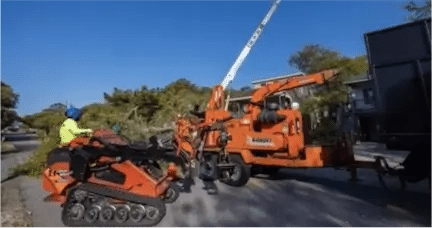
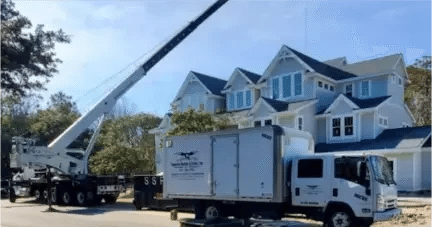
Selecting the right crane is about more than size. It is about matching the equipment to your job site, terrain, and project goals. The wrong choice can lead to delays, budget overruns, and safety issues. Whether you are lifting trusses on a new home in Elizabeth City or setting bridge beams near the Outer Banks, the type of crane you use will determine how safely and efficiently the job gets done.
In coastal North Carolina, access roads are narrow, the soil can be soft, and permits can be strict. Understanding how small boom trucks compare to larger cranes helps you plan ahead and avoid costly mistakes.
What Is a Small Boom Truck?
A small boom truck is a commercial truck equipped with a telescoping hydraulic crane. It combines transportation and lifting into a single unit, allowing operators to drive directly to the job site, set up quickly, and complete lifts without support vehicles.
These cranes are popular for jobs where space, budget, and time are limited. They work best on firm or paved ground and are designed for shorter reach and moderate weight lifts.
Typical Specifications:
- Lift Capacity: 15 to 30 tons
- Boom Length: 40 to 70 feet
- Setup Time: Often under one hour
- Mobility: Fully road legal and easy to relocate between sites
When to Use a Small Boom Truck:
- Residential or commercial construction with tight access
- Utility and light infrastructure projects
- Rooftop HVAC placement or small truss installation
- Short-term lifts that require quick setup and breakdown
Small boom trucks shine on projects that need reliable lifting power without the added cost and time of a large crane.
When a Larger Crane Is the Better Choice
Larger cranes are designed for high-capacity, high-reach, or complex lifts. They include heavy-duty boom trucks, hydraulic truck cranes, and crawler cranes. These machines can handle projects that involve massive loads, longer reach distances, or uneven ground conditions.
Unlike small boom trucks, large cranes require more setup time and logistics. They often need specialized transport, ground mats, and additional crew to operate safely.
Typical Specifications:
- Lift Capacity: 55 to over 300 tons
- Boom Length: 100 feet or more
- Setup: Requires stabilizing, rigging, and sometimes disassembly for transport
- Ground Pressure: Distributed through outriggers or tracks to handle soft terrain
Best For:
- Bridge construction and industrial projects
- Multi-story buildings and high-rise work
- Marine, wind, or heavy infrastructure lifts
- Projects with unstable or marshy soil
Larger cranes are the right choice when the job calls for heavy lifting strength, long reach, and enhanced stability.
Key Differences Between Small Boom Trucks and Large Cranes
| Feature | Small Boom Truck | Large Crane |
|---|---|---|
| Lift Capacity | Up to 26 tons | 55 to 300+ tons |
| Reach | 40–70 feet | 100–300+ feet |
| Setup Time | Fast, under an hour | Slower, often several hours |
| Mobility | Road legal, self-contained | May require escorts or special transport |
| Cost | Lower rental and crew cost | Higher overall cost and setup time |
| Ideal Site | Firm, paved, or urban locations | Soft or uneven ground, large sites |
| Project Type | Short or moderate lifts | Heavy, long-reach, or industrial projects |
The best equipment depends on your priorities. If you need mobility and quick setup, choose a small boom truck. If you need reach and lifting power, a large crane is the safer option.
Site Access and Terrain
In many areas of eastern North Carolina, the landscape dictates the equipment.
- Urban or tight spaces: Small boom trucks excel in residential or commercial zones where maneuvering space is limited.
- Rural or coastal sites: Larger cranes with wider stabilization systems are better suited for soft, sandy, or uneven ground.
- Permitting: Some large cranes require special transport routes or temporary road closures. Boom trucks, being smaller and self-contained, rarely do.
Choosing based on terrain can prevent both operational delays and safety risks.
Cost and Efficiency
Cost efficiency depends on how well the crane’s capabilities match your project. Small boom trucks are generally more affordable, faster to deploy, and require fewer crew members. They save money when the lifts are straightforward and moderate in weight.
Larger cranes cost more to rent and operate but become cost-effective for major lifts where smaller machines would struggle or fail. The added setup time and crew requirements are offset by their ability to complete larger, complex lifts safely and accurately.
Safety and Load Planning
Every lift should begin with a clear load plan. Always refer to the manufacturer’s load chart and consider boom angle, lift radius, and total weight. A small boom truck may handle 26 tons at close range but far less at full extension. Larger cranes provide higher stability across a broader range of radii, but they still depend on correct setup and ground support.
Best Practices:
- Verify lift height and radius before mobilizing equipment
- Confirm soil stability and slope conditions
- Ensure the site can accommodate outriggers or mats
- Assign one qualified signal person to coordinate communication
Safety starts with planning, not lifting.
When to Choose Each Type
Small Boom Truck:
- Projects with multiple short lifts in different locations
- Urban or residential areas with narrow access
- Lighter loads that do not exceed 25–30 tons
- Jobs that prioritize quick mobilization and low cost
Large Crane:
- Heavy structural lifts or industrial installations
- Work on soft or unstable ground
- Multi-story buildings and bridge construction
- Long-term projects where reach and precision are key
Understanding your project’s scope and environment helps determine which machine will provide the safest and most efficient results.
The Bottom Line
Both small boom trucks and large cranes have their place in modern construction. Boom trucks offer flexibility, quick setup, and lower operating costs for moderate lifts. Large cranes bring unmatched strength, stability, and reach for complex, high-value projects.
The smartest approach is to match the crane to the specific job conditions rather than choosing based on price or habit.
Albemarle Crane Service provides both small boom trucks and large cranes for projects across eastern North Carolina. Our team assists with lift planning, load chart analysis, and on-site safety compliance to ensure every project runs smoothly.
Call (252) 491-5550 or request a quote online to find the right crane for your project today.