Replacing rooftop HVAC equipment in Nags Head, NC, requires careful planning because coastal winds, elevated buildings, restricted access, and challenging ground conditions can complicate the lifting process. Many Outer Banks properties have raised foundations, narrow driveways, and rooftop equipment locations that standard installation equipment cannot easily reach. For HVAC contractors and property owners, choosing the right crane service is essential for removing existing equipment and positioning replacement units safely.
Understanding the challenges before scheduling a lift helps prevent delays, equipment damage, and unnecessary disruptions. Here are seven factors that make rooftop HVAC replacement particularly challenging in Nags Head.
1. Coastal Winds Can Affect Crane Lifting Operations
Strong coastal winds can make lifting large HVAC units more difficult. Equipment suspended above a building can move unexpectedly when exposed to changing wind conditions. Larger rooftop units also have considerable surface areas that can catch wind, making their movement harder to control.
Before scheduling a lift, contractors should consider:
- Forecast wind speeds and changing weather conditions
- HVAC unit dimensions and total lifting weight
- Crane positioning and boom configuration
- The distance between the crane and rooftop
- Manufacturer operating limits and applicable safety requirements
A reliable crane rental company in Nags Head, NC evaluates these conditions before proceeding. If wind conditions exceed safe operating limits, postponing the lift may be necessary. To learn more, read our blog on ‘How wind and weather affect crane operations on the Outer Banks’.
2. Elevated Buildings Make HVAC Equipment Difficult to Reach
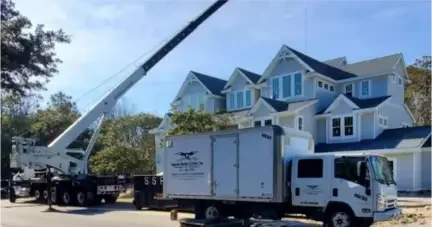
Many Nags Head homes and commercial buildings sit on elevated foundations supported by pilings. While this construction helps accommodate coastal conditions, it can make rooftop equipment replacement more complicated. Moving a heavy HVAC unit through staircases, narrow access points, or interior spaces is often impractical.
A crane provides a more direct lifting solution by transporting equipment from ground level to the designated rooftop location. However, building height alone does not determine crane selection. The horizontal distance between the crane and the rooftop also affects lifting capacity. Crane rental services help contractors manage equipment placement on elevated residential and commercial properties.
3. Restricted Property Access Complicates Crane Positioning
Limited space can prevent a crane from positioning close to the building. Narrow driveways, landscaping, fences, neighboring properties, and overhead utility lines can restrict equipment access.
Before scheduling, contractors should identify:
- Available crane setup space
- Driveway width and turning clearance
- Nearby buildings and trees
- Overhead power lines
- Distance to the final rooftop placement point
These details help determine whether the crane can reach the equipment location while maintaining the required lifting capacity. Crane services for HVAC installations supports contractors handling difficult rooftop replacement projects throughout the Outer Banks.
4. Sandy Ground Requires Proper Crane Stabilization
Sandy soil is another important consideration for crane operations in coastal North Carolina. Soft, uneven, or recently disturbed ground can affect the stability of heavy lifting equipment. Mobile cranes require suitable ground support and properly positioned outriggers before lifting. Depending on site conditions, supporting materials such as crane mats may be necessary.
The Occupational Safety and Health Administration (OSHA) has specific ground condition requirements for cranes, which explain the importance of firm, adequately supported ground during crane operations. Contractors should share information about the property surface, drainage, and available setup locations before the scheduled lift.
5. HVAC Weight and Crane Reach Determine Equipment Selection
Choosing a crane based only on HVAC unit weight can lead to incorrect equipment selection. Crane capacity changes depending on boom length, lifting radius, boom angle, and operating configuration. For example, a crane may lift a particular HVAC unit at a short radius but may not have sufficient capacity when positioned farther from the building.
Contractors should provide the crane company with:
- HVAC equipment weight and dimensions
- Required lifting height
- Horizontal lifting distance
- Pickup and placement locations
- Available crane setup space
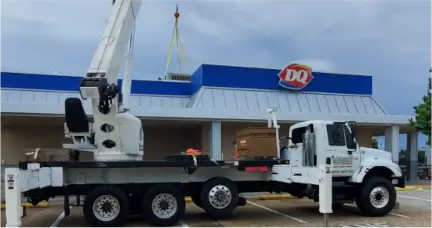
Albemarle Crane Service operates a 26-ton Altec boom truck, a 55-ton National crane, and a 100-ton Link-Belt mobile crane. The appropriate equipment depends on the specific lifting requirements.
6. Overhead Power Lines and Rooftop Obstacles Require Planning
Power lines, tree branches, neighboring buildings, and rooftop structures can interfere with HVAC lifting operations. The crane boom, suspended equipment, and rigging arrangement all need sufficient clearance throughout the lifting path.
Electrical hazards deserve particular attention. Contractors must identify overhead utilities and follow applicable OSHA clearance requirements before crane operations begin. The OSHA crane and derrick safety standards explain the requirements for crane operations in construction.
7. Removing Old HVAC Equipment Requires Additional Coordination
HVAC replacement involves two separate lifting operations: 1.) removing the existing unit and 2.) positioning the replacement. The old equipment may have different dimensions, weight distribution, and rigging requirements from the new system.
Contractors should coordinate equipment disconnection, lifting points, removal routes, and landing locations before the crane arrives. The roof must also be suitable for the replacement unit. HVAC contractors or qualified building professionals should verify structural supports, equipment curbs, and mounting arrangements.
Why Choose Albemarle Crane Service for Rooftop HVAC Replacement?
Albemarle Crane Service is a trusted choice for rooftop HVAC replacement in Nags Head, offering experienced crane operators and reliable lifting equipment for challenging coastal projects. Since 2017, we have supported residential and commercial lifting projects throughout the Outer Banks (OBX). Our NCCCO-certified crane operators bring professional expertise to every job, backed by our bonded and insured services.
Albemarle Crane Service operates a versatile fleet that includes 26-ton, 55-ton, and 100-ton cranes to accommodate different equipment weights, building heights, and lifting requirements. We also offer same-day service when available and 24/7 availability for crane service needs. From evaluating site access to positioning heavy HVAC units on elevated rooftops, we focus on safe, efficient, and carefully coordinated lifting operations. Choose Albemarle Crane Service for dependable crane support when your rooftop HVAC replacement demands experience and the right equipment.
Frequently Asked Questions
Why does rooftop HVAC replacement require a crane?
A crane helps lift heavy HVAC equipment onto elevated buildings when staircases, elevators, and conventional delivery equipment cannot provide practical access.
What information does a crane company need for HVAC lifting?
The crane company needs equipment weight, dimensions, building height, lifting radius, setup location, and details about surrounding obstacles.
Can coastal winds delay rooftop HVAC replacement?
Yes. Strong winds can affect suspended equipment stability and crane operating limits. The operator must evaluate conditions before proceeding.
Can a crane lift an HVAC unit over an elevated coastal home?
Yes. A properly selected crane can lift an HVAC unit over an elevated home and position it on the rooftop. The crane selection depends on the unit’s weight, building height, lifting radius, and available setup space.
How far in advance should I book a crane for rooftop HVAC replacement?
Ideally, contact a crane company as soon as the HVAC replacement is planned. Early scheduling allows time to evaluate site access, equipment specifications, lifting requirements, and weather conditions.
What information should HVAC contractors provide before scheduling a crane lift?
Contractors should provide the HVAC unit’s weight and dimensions, rooftop height, distance from the crane setup location, available access space, and any overhead obstructions. These details help determine the appropriate crane and lifting arrangements.
Does Albemarle Crane Service provide HVAC crane service in Nags Head?
Yes. We provide crane services for HVAC installations in Nags Head, NC, and surrounding Outer Banks communities. Call (252) 999-9110 to discuss your project and request an estimate.